
Written by Jeremy Berlin
Want to look into the future?
Try driving around College Park, Maryland, on an arctic Tuesday in January. You’ll see nondescript office buildings become high-tech research hubs. Past-their-prime motels recast as fresh-faced retail shops. Student housing leap decades ahead, as cramped midcentury dorms morph into multi-use spaces for 21st-century living.
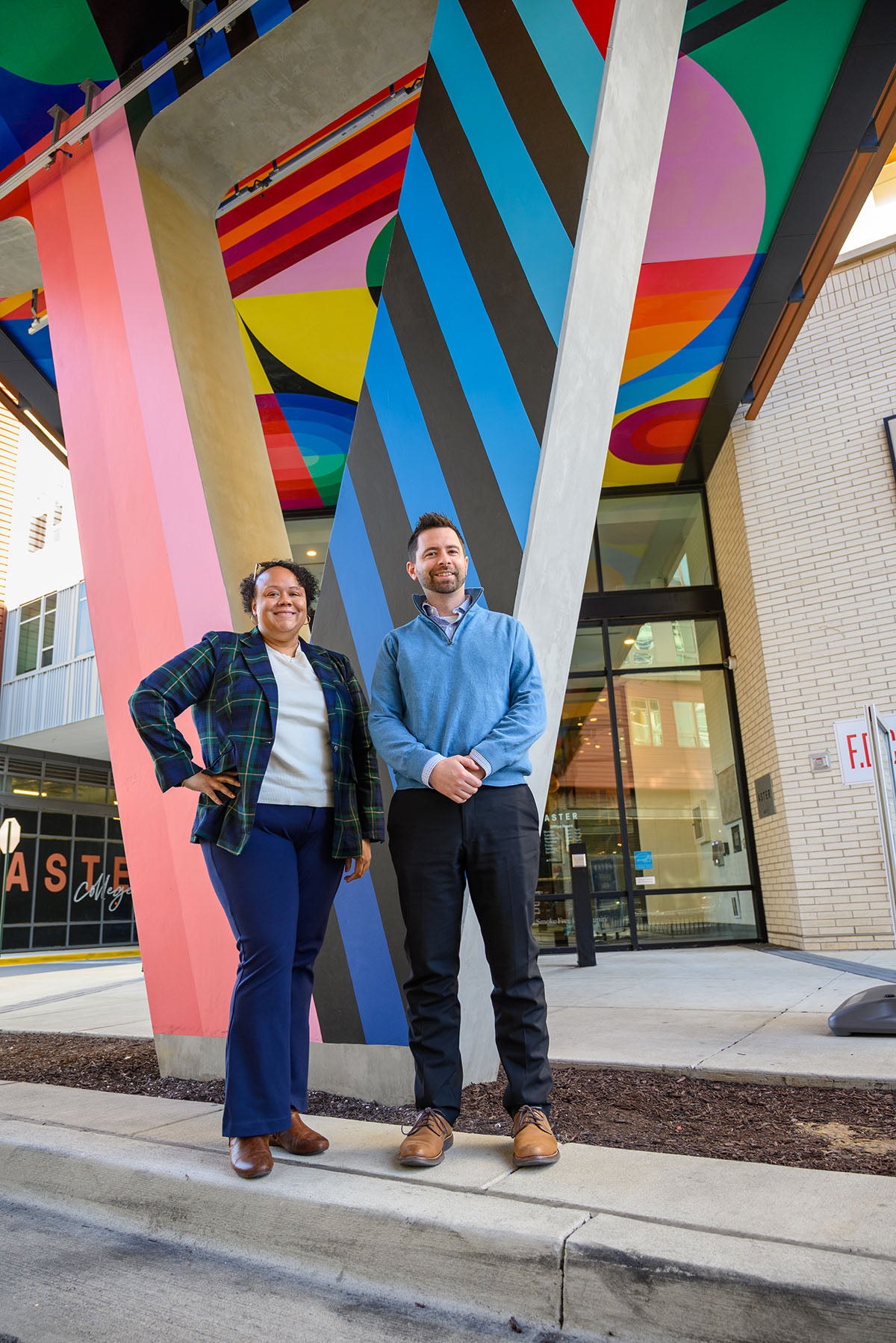
At least, that’s the future you’ll see if your carmates are Tom Parker ‘09, MRED ‘17 and Jessica Jones MRED ‘09.
The two developers are graduates of the University of Maryland (UMD) School of Architecture, Planning & Preservation (MAPP). They’re also vice presidents of the Terrapin Development Company (TDC), a private real estate entity charged with reimagining Greater College Park and reshaping it into a “vibrant, diverse and walkable community.”
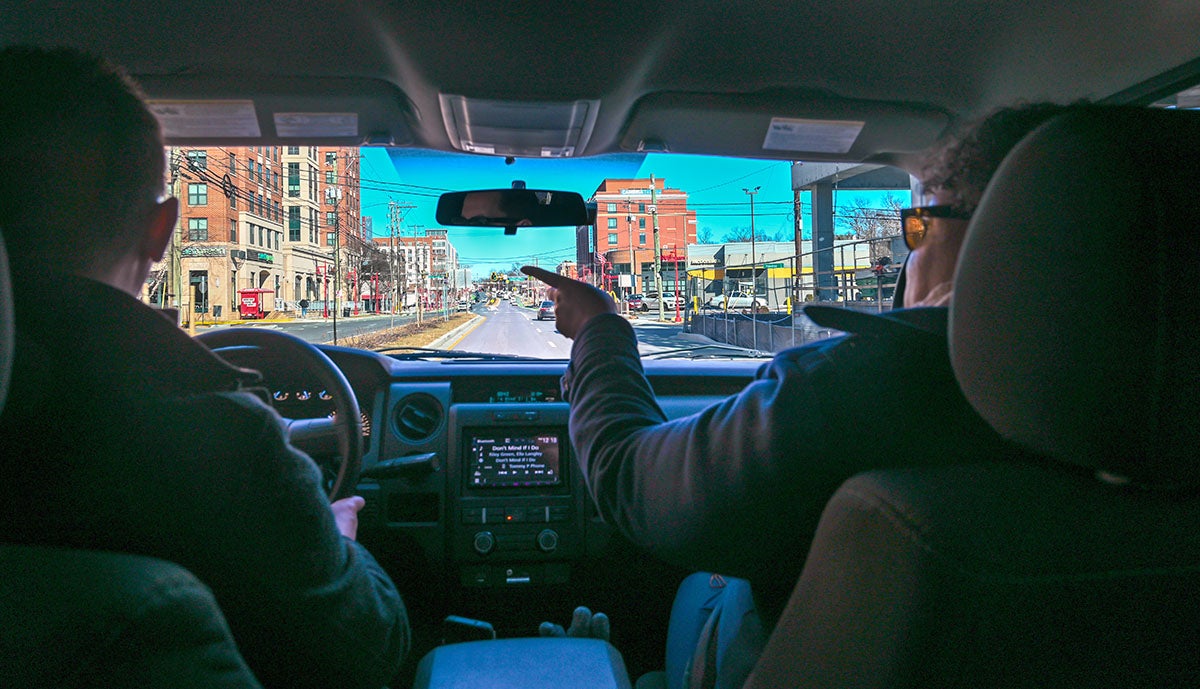
That transformation is well underway. As Parker pulls his four-door pickup into an office park near the College Park Metro station, Jones points out the window at what’s starting to replace it: a state-of-the-art, mixed-use space called Aviation Landing.
“A lot of people would see an area like this and they’d think: ‘It’s just warehouses and auto-repair facilities,’” says Parker. That’s because they see only what it is, and was. “But with our developer heads on, we can see what it will be.”
He gestures excitedly at the new buildings rising next to existing ones.
“Look there,” Parker says. “That’s the College Park Airport, where the Wright Brothers tested planes. It’s the world’s oldest continuously operated airport—a gem of worldwide significance!—with its own Smithsonian-quality museum.”
Parker points to other local amenities: an ice rink, an Olympic-size pool, and a tennis center—the same one where top-ranked pro Francis Tiafoe learned to play. Then he shakes his head and says, almost to himself, “It doesn't make sense why this area wasn’t developed earlier.”
Now TDC is actively remedying that oversight, finding the right partners to help build that future, one project at a time.
If You Build It …
The Terrapin Development Company was founded in 2017 by UMD and the University of Maryland College Park Foundation (UMCPF). Then-UMD President Wallace Loh, keen to improve the community, decided to redevelop UMCPF-owned properties in Greater College Park—an area loosely bounded by I-495 to the north, Northwest Branch to the west, Kenilworth Avenue to the east and the Hyattsville Arts District to the south.
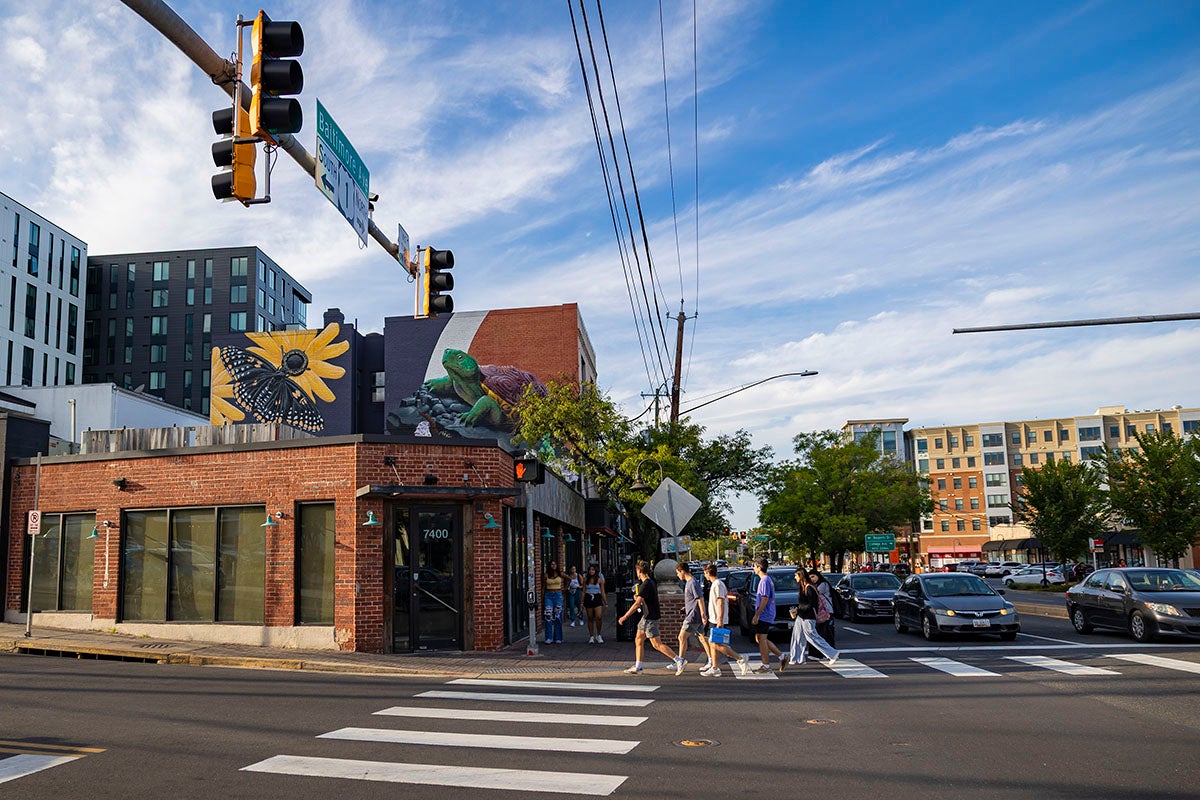
In the years since, the TDC-led Greater College Park Initiative has been turning the Baltimore Avenue corridor into a revitalized community of new academic and residential buildings, retail spaces and public–private research enterprises, with enhanced transportation and connectedness. TDC’s nine-member board decides which properties to buy and develop. Then Parker and Jones get to work.
“We don’t need to handle every deal or project ourselves,” Parker says. “We’ll typically craft the vision. If we own or control the land, we’ll find a good partner—we work with local companies and national ones—and really let them work. We also spend a lot of time finding the right mix of retailers—of national brands and local mom-n-pops.”
Jones says TDC seems to have become the linchpin of College Park development.
“Everyone knows Tom,” she says. “Whenever there’s an opportunity in this area, either Tom or Ken [Ulman, TDC’s president] hears about it.”
Clean, Well-Lighted Places
Central to TDC’s vision is something called placemaking. A buzzy word these days, it’s both a process and a philosophy—a holistic approach to planning, building and managing public spaces with health, happiness and well-being in mind.
Jones says for TDC, placemaking means a mix of physical improvements, economic development and accessibility—walking, biking, public transportation—that help bring the community together. To tap Greater College Park’s potential, Parker says, TDC looks beyond what UMD owns.
“We’re embedded in both the university and the community,” he says. “We bring in disaggregated land owners to become part of the vision. When they have input and are on advisory boards, they voluntarily contribute. Those are great placemaking initiatives.”
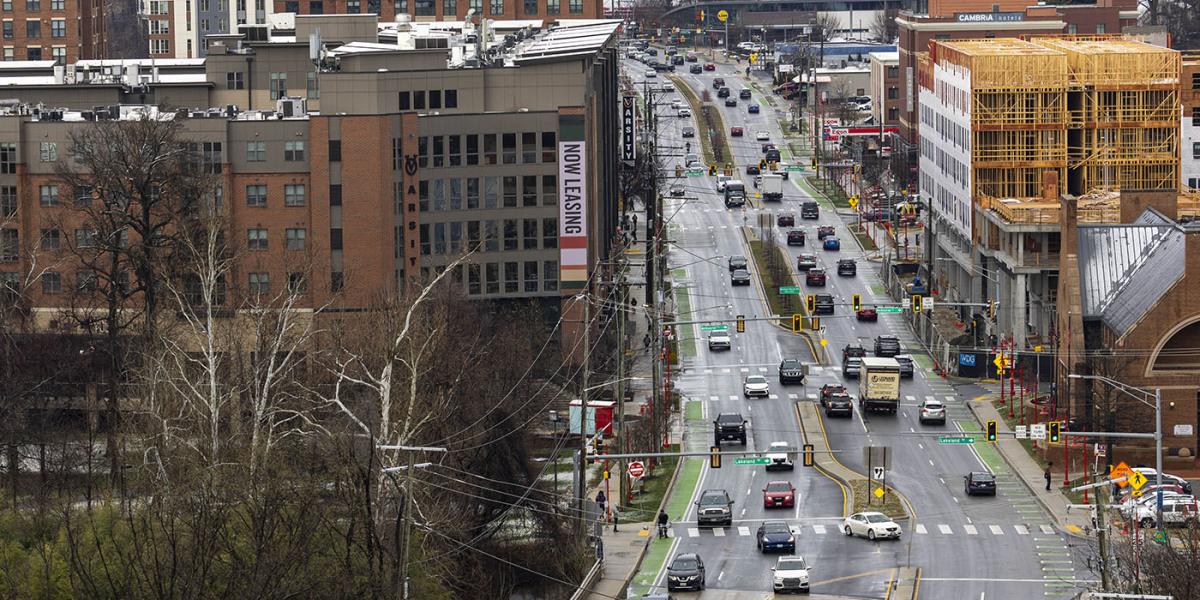
Turning College Park’s de facto main street into a real Main Street is a top-of-mind placemaking goal for TDC. One way to achieve it: Make Baltimore Avenue friendlier to bikers and pedestrians. “There used to be seven lanes to get across from Campus Drive!” says Parker. TDC has helped eliminate some of them while ensuring that bike lanes do exist.
Another placemaking tack is to bring university buildings closer to Baltimore Avenue.
“Most UMD facilities are sited in the center of campus,” Parker says. “The more activity we bring to Baltimore Ave., the more dynamic the street becomes.”
Placemaking may be a new term, but one of its central tenets is decidedly old-fashioned: getting to know your neighbors. TDC is fostering that in an area called the Discovery District—the heart of the College Park Initiative and a hub of innovation and entrepreneurship. The District has nearly 7,000 daily employees, Parker says, “but they’re really not connected. To bring people together, TDC manages the Discovery District Partnership—a mix of private land owners, community stakeholders and UMD. We get a food truck there some Wednesdays, facilitate farmers markets, and hold events—like a recent terrarium-building.”
Progressive Development
 Affordability is a widely used word these days. But Jones notes that it can mean different things to different people. For her, it's about the importance of attainable housing for all. Her development background is deeply rooted in that idea. And her work today continues to cast affordability and sustainability in starring roles. .
All of which makes Jones understandably “sensitive to gentrification.” “But,” she adds, “when you have an opportunity to create beautiful projects and bring retailers or residents back to communities they’ve worked or lived in all their lives, in order to take advantage of the project—that’s heartwarming to me.”
Before she came to TDC two years ago, Jones drew on her LEED accreditation while managing low-income-housing tax-credit development projects. She oversaw a solar installation project that delivered 1 megawatt of solar power to 12 properties—one of the largest installations of its kind for multi-family affordable housing in Washington, D.C.
When Jones isn’t bringing the future to life, she’s teaching others to see it—as a part-time professor at UMD. She leads the capstone thesis course, a required part of UMD’s Master of Real Estate Development Program. It’s the same program from which Jones earned a degree.
But it was during her undergraduate days at Morgan State University that she “really fell in love” with the idea of affordable housing. While taking an elective class toward her B.S. in Architecture and Environmental Design, the Laurel, Maryland, native became smitten. Now she’s trying to instill that love in a new generation.
“When you’re teaching,” she says, “it’s so nice when you see the lightbulbs come on. You’re like, ‘Yes! Yes! You get it.’”
Not Your Father’s College Park
If you haven’t been to College Park recently, you may have a hard time recognizing it. But it won’t take you long to spot a TDC-led development project. They’re everywhere.
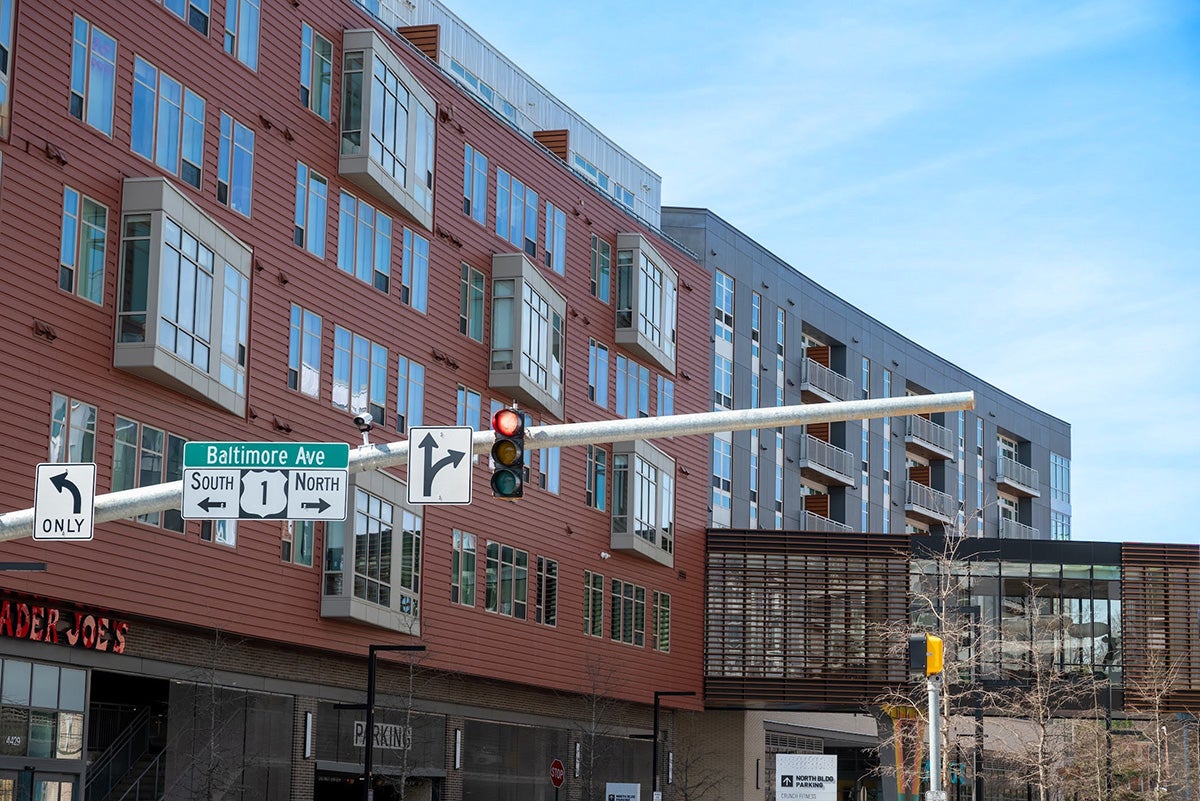
One is Union on Knox—an 800-bed student housing facility at the intersection of Knox Road and Sterling Place. With ground-floor retail, a street for festivals, and a grand staircase that connects the campus to downtown College Park, it’s a far cry from the shabby “Knox Box” days of yore.
Clearly this is not your father’s College Park.
It’s not Tom Parker’s either. His Dad preceded him at UMD. So did his older brother. Tom arrived himself in 2005, after growing up in Anne Arundel County. He graduated with a B.A. in Architecture in 2009, then pivoted to construction, working for a contractor. When UMD began hiring project coordinators for campus renovation projects in 2012, Parker got the call.
Back at the family alma mater, he worked for UMD Facilities Management while studying at night for his master’s in real estate development. After he graduated, he moved to UMD’s real estate office, then to TDC the year it formed.
Today, Parker is a jack-of-all-trades. His work at TDC runs the gamut from managing properties and budgets to supervising accounting, negotiating contracts and overseeing construction. His familiarity with College Park also makes him alert to opportunities.
For 50 years, 8200 Baltimore Avenue was occupied by a liquor store—and surrounded by 2,500-plus students in multiple student housing facilities. “Not a great fit,” Parker said. Now, thanks to TDC’s initiative, the spot has a more appropriate occupant.
“Vigilante Coffee is the coolest coffee shop in the region,” Parker says. It offers “very, very strong coffee, plus a great third space” for students.
My Old School
Parker and Jones say their MAPP experiences helped them map their own futures, along with College Park’s.
“Having professors who were real professionals, not just academics, I got to learn about the real world,” says Jones. “My time as a student there was short. But it’s made such a huge difference for my career. Not just the degree, but being able to say I went to UMD.”
For Parker, “The opportunity afforded me when I came back here defined my whole career. It is me.”
Now Parker he’s helping College Park get ready for whatever, and whomever, comes next: “Some of the things we’ve torn down for redevelopment were part of my undergrad experience. It’s sad to see them go. But I’m really glad to have built something for the next generation. Maybe my kids will go here too.”
Making Their Mark, On College Park
From student housing to gleaming civic strongholds, view some alum-created spots that are transforming College Park, by visiting: go.umd.edu/making-cp.
Getting Students Engaged—on the Ground Floor
Q: Let’s say you’re a school that offers a distinguished graduate fellowship in planning, real estate development and building communities. How would you make it even better?
A: You double down on the investment.
That’s what will happen this year with the Richard M. Finkelstein Distinguished Graduate Fellowship, the first distinguished fellowship at UMD’s School of Architecture, Planning and Preservation in partnership with the Terrapin Development Corporation (TDC). Finkelstein was a visionary leader in College Park real estate development—a UMD graduate (’72), a member of the UMCPF Board of Trustees and a chairman of TDC’s board—whose legacy continues to shape future generations of UMD students and the College Park community.
Established in 2023 and open to graduate students in architecture, planning, historic preservation and urban planning, the fellowship—and Richard’s legacy—continues to grow. With an initial intention to raise $250,000, Richard’s brother, Neil, along with real estate developer and longtime friend Michael Wohl and TDC President Ken Ullman, created a groundswell of support among family and friends to bring the investment to $1 million. Now, Neil is intent on doubling that amount, which would support four fellows annually—one from each of MAPP’s program areas.
Each fellow gains critical hands-on experience in real-world development. TDC gains additional high-skilled, in-house employees. And MAPP burnishes its reputation as a national leader in real estate education, advancing its mission by offering experiential professional development. Call it a win-win-win.
And maybe add one more “win” to that list. As Richard’s brother, Neil Finkelstein, puts it: “This fellowship celebrates my brother’s proud work, combining his love of UMD and his lifelong value of education with opportunities for new generations of select graduate students.”