
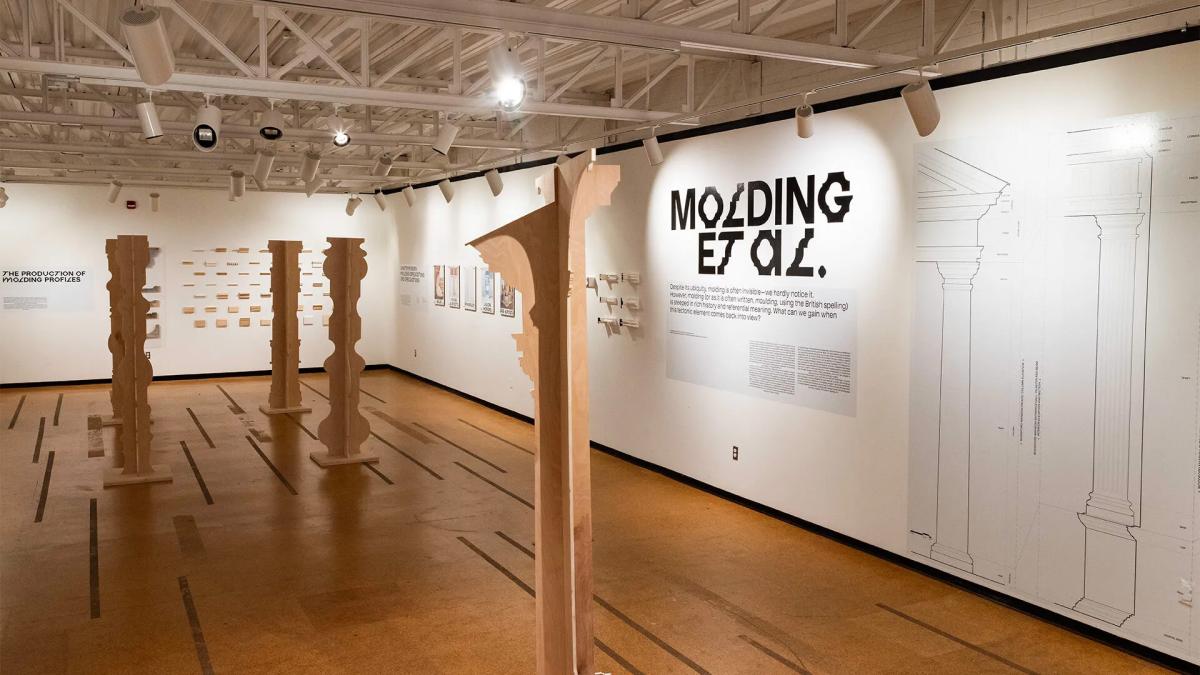
Despite its diminutive size, molding is an architectural element with monumental personality. It can transform a builder’s-grade bedroom into a cozy, luxe enclave. It can add a historic feel to a new house, and energy to an old one. Stacked together, it can make a boring brick facade look downright regal.
The trim and adornments made of wood, plaster and even plastic are ubiquitous tricksters of the eye yet often go unseen. Now, a new University of Maryland exhibit is urging a second look.
“Moldings et al.,” which opens Friday at the Architecture Building’s Kibel Gallery, examines the history, materials and lasting endurance of molding (or “moulding”) in the annals of architectural building craft. A culmination of research efforts by University of Maryland Associate Clinical Professor Lindsey May, the exhibit (ironically on display in a room devoid of molding) showcases a vast catalog of molding types, its limitless applications and the transformation that takes place when stacks of slim, shaped wood adorn a facade.
“It’s a tiny piece that does a lot,” said May, who has researched molding for nearly a decade. “I want people to see this detail as something that impacts them and shapes how they experience space.”
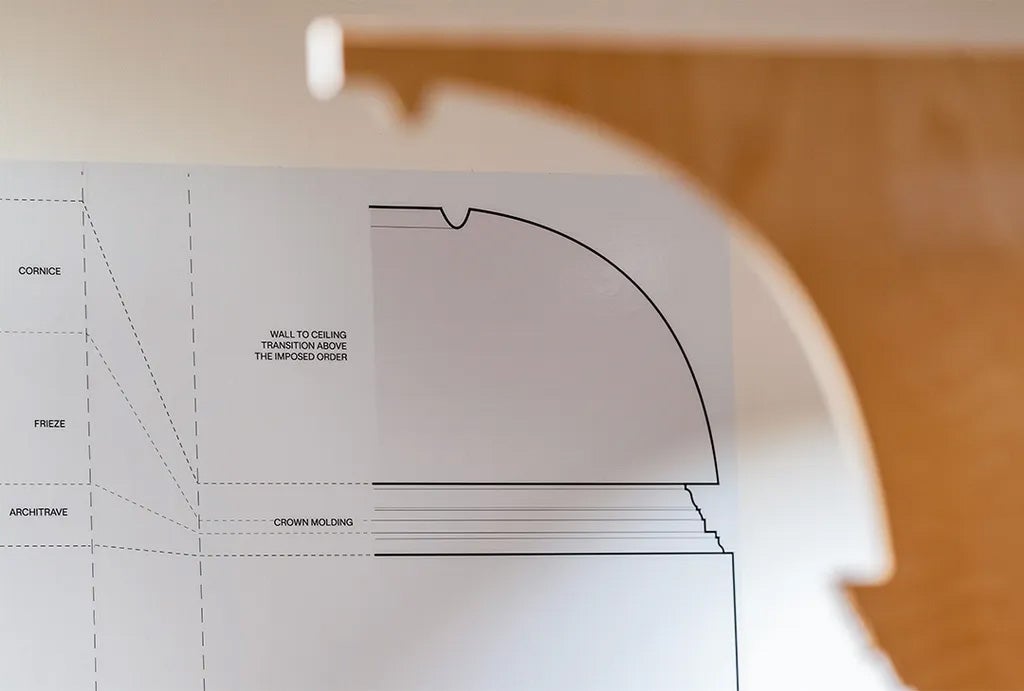 Rooted in Western classical architecture, moldings—from elaborate scrolling acanthus friezes to the humble shoe trim—were initially contrived to emulate beams and other structural elements of a building. Later, they were used to cover seams—such as where walls meet a floor—and to create scale and depth to influence perception. It’s the secret sauce, said May, that makes big rooms feel small, cold rooms feel warm, and plain ones assume new identities, from a Versailles-inspired chateau to a New England salt box cottage.
With the advent of modern architecture, though, sparse, clean lines dominated the building craft, and molding has disappeared from architectural conversations over the past century. May first gained an interest in the element after a client from her firm, Studio Mayd, insisted she help choose trim for their rowhouse renovation; May realized it was something she’d never been taught in school.
“The last major compendium on the subject, ‘The Theory of Mouldings’ by C. Howard Walker, was published in 1926,” she said. “For something that’s everywhere, it’s oddly been forgotten.”
With both precision and form, it's no surprise that there are rules with molding. A portion of the exhibit explores what happens when the molding playbook is tossed out; the mega-molded rooms created by May range from excessive to exquisite. And that, ultimately, is May’s hope with the exhibit: that molding once again gets the props it deserves.
Molding is more than adornment, said May. It can offer clues to a building’s history and what it's trying to communicate. Here are five examples worth exploring on campus:
Memorial Chapel
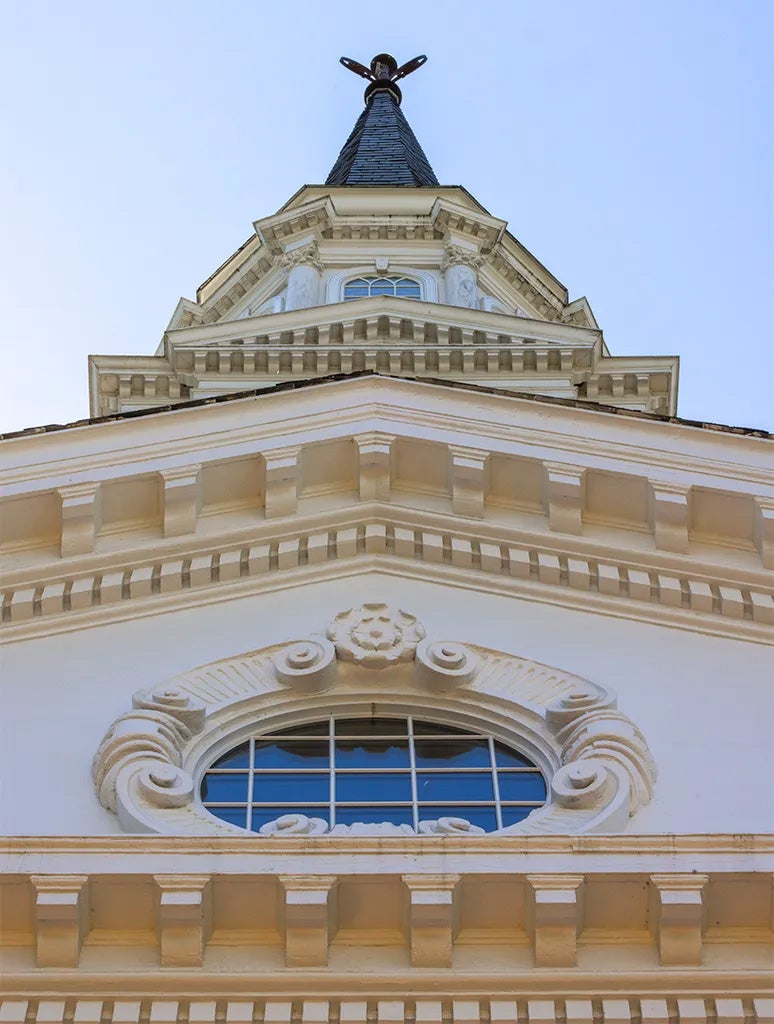
The decorative trim above the main doors (called an entablature) uses several layers of molding, including dental trim (named for its teeth-like appearance), to create rhythm, shadow and size. “More layers of detail often relate to a place’s societal significance,” said May.
McKeldin Library
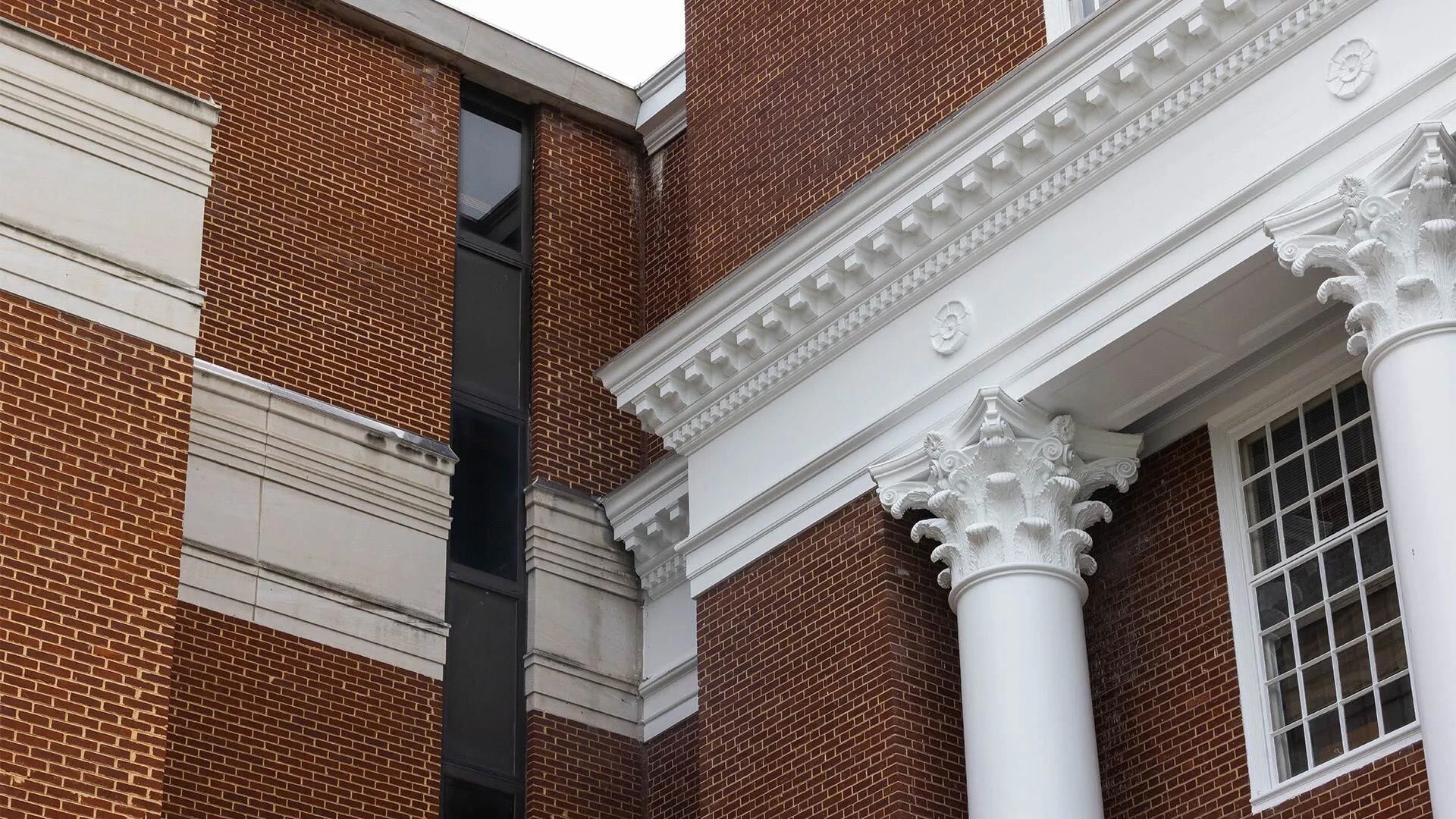
From the front entrance, the building’s Georgian detail exudes distinction; but just around the corner, the pomp and circumstance abruptly halts where the original library (built in 1957) meets its 1990 addition. “Molding tells us more than we realize, whether it's the agenda of an architect, or construction methods, or in this case, the history of a building,” said May.
Architecture Building
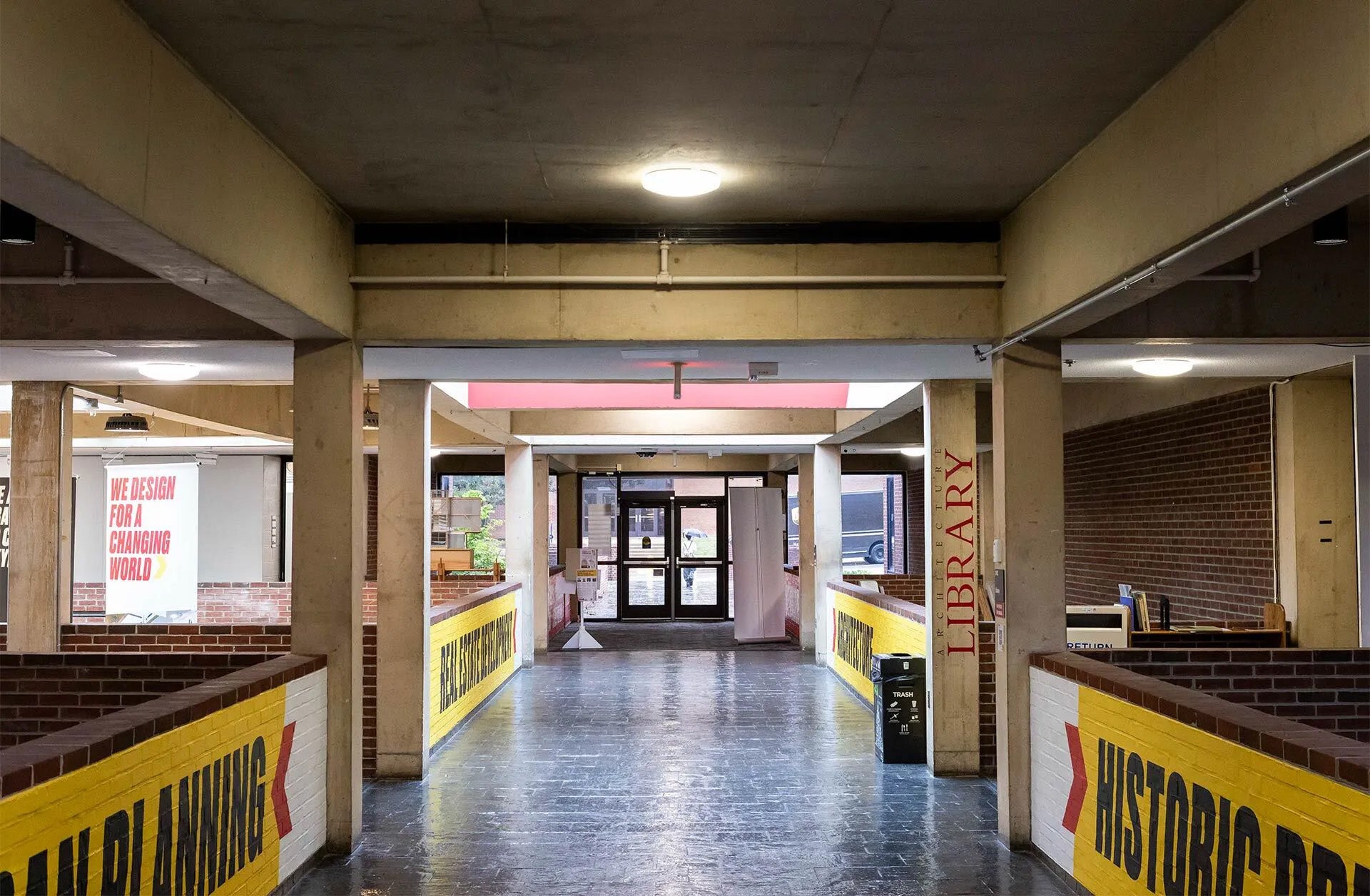
Built during the peak of the brutalist architecture movement, the home of the School of Architecture, Planning and Preservation (MAPP) is a protest to molding, manifested in brick and mortar. Unlike its campus brethren, the Architecture Building forgoes a thick layer of white roofline trim. Exposed interior concrete beams intersecting with brick further drive home its anti-molding stance. “It’s like a disgruntled teen wearing ripped jeans instead of a suit to a wedding,” said May. “It’s like, OK, guys, we get it, you’re different.”
Reckord Armory
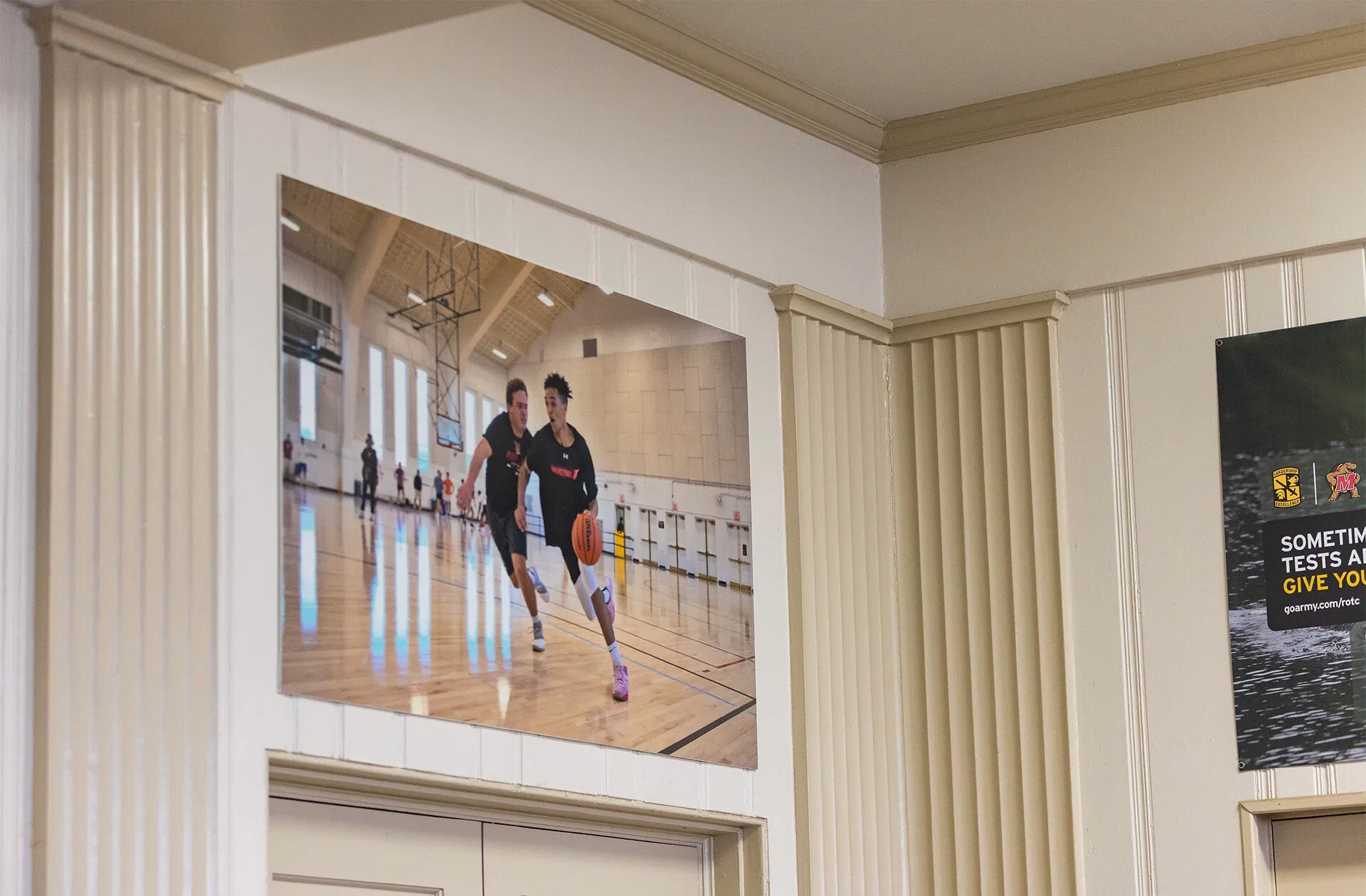
Few molding-adorned exteriors on campus are as magnificent as Reckord Armory. But just inside is a decorative don’t: Decorative columns—that lack a base and cap and don’t hold anything up—make the room seem taller, which makes everything else feel smaller. “Not all molding is rooted in the same logic as classical architecture,” she said. “Sometimes it’s used in a very controlled way, and sometimes very liberally. I would say this is an example of the latter.”
Preinkert Hall
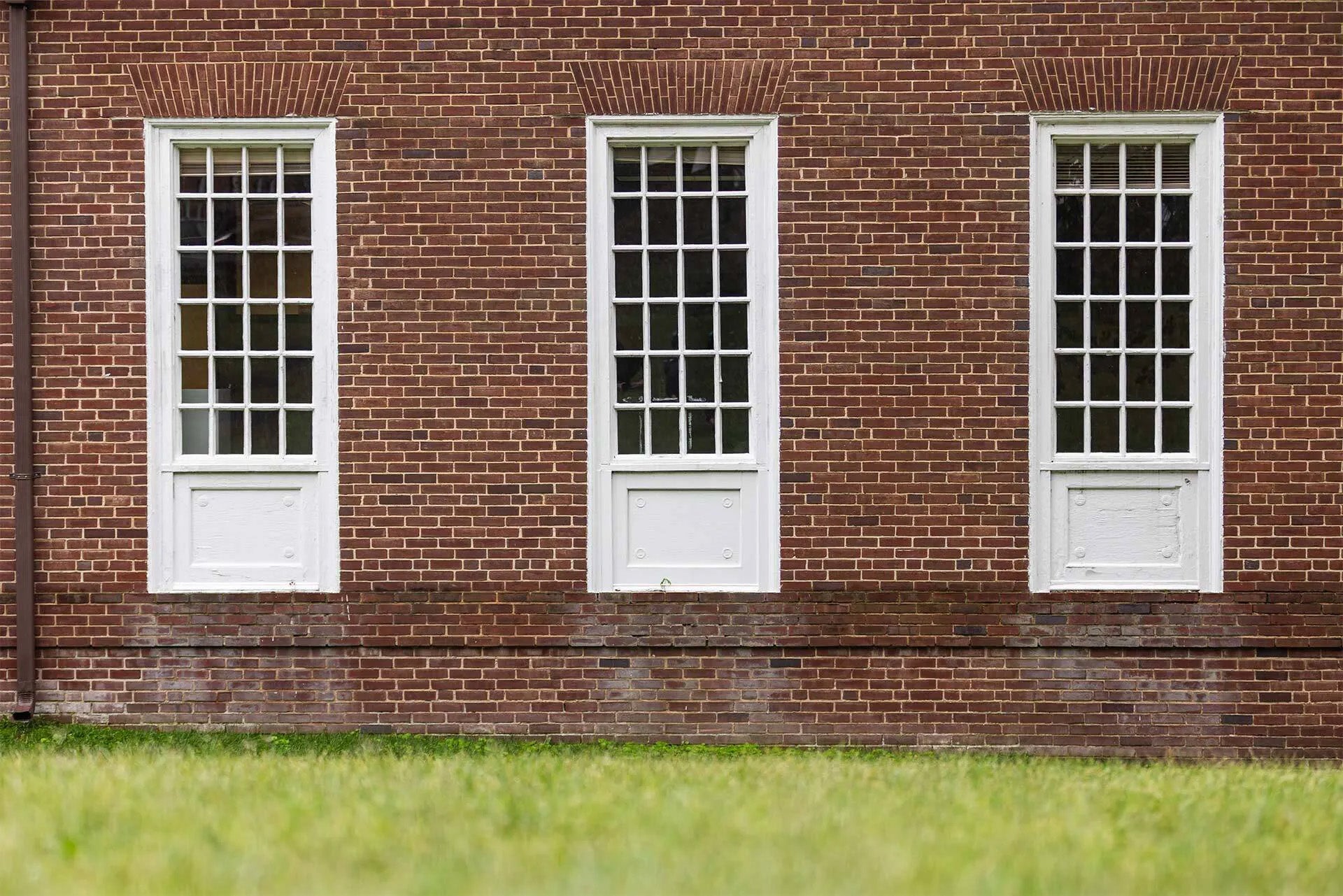
To make a ground-floor window literally feel grounded and more grand against its decorated entrance, molding panels on many windows around campus make them seem larger, like at the former field house that now houses MAPP offices. “It’s about what it does to the windows but also the composition of the building, and how each unit communicates and informs each other,” said May.
”Molding et al.” opens Friday with a gallery talk and reception at 5 p.m. It will be on view until Dec. 11. The Kibel Gallery is open 10 a.m.-5 p.m. Monday-Friday.