
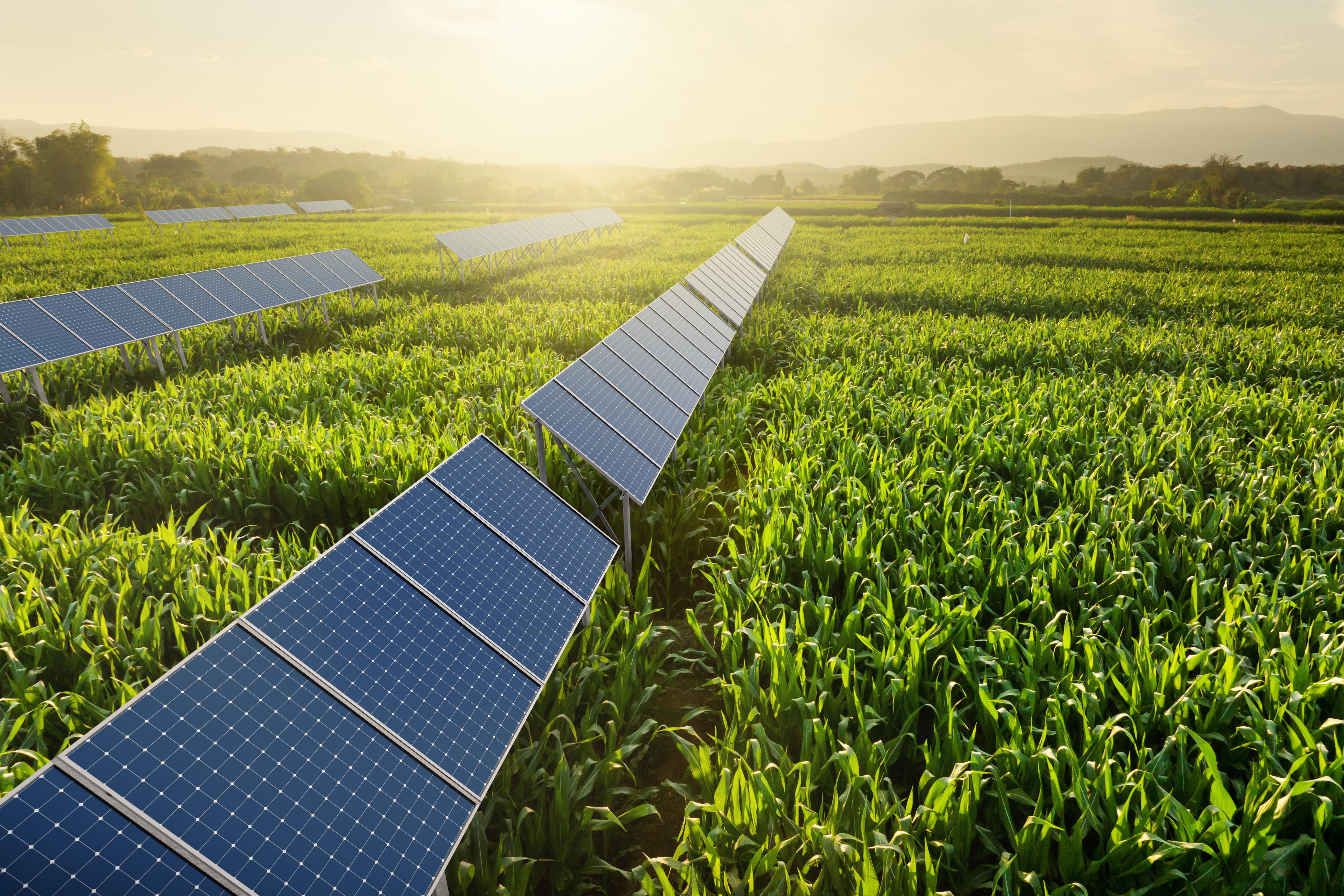
Maryland has committed to rapidly expanding the production of renewable energy – including solar – while also maintaining strong commitments to land conservation and farmland preservation. While these priorities are not inherently incompatible, they do create practical questions about where renewable energy infrastructure should be located, how agricultural land should be protected, and whether new models of shared land use can help reduce conflict.
Agrivoltaics – broadly defined as the co-siting of solar energy generation and agricultural production – is emerging as a possible mechanism for advancing Maryland’s renewable energy goals without losing valuable farmland. A year-long study by Environmental Finance Center (EFC) and the National Center for Smart Growth (NCSG) at the University of Maryland evaluated agrivoltaics as a viable strategy for advancing the state's energy and agriculture goals – whether sufficient land is available, how existing regulations and incentives shape implementation, and the extent to which potential adopters view this practice as beneficial.
This study included three interrelated elements: a review of major policy and regulatory drivers shaping solar development and agricultural land preservation in Maryland; a land use analysis to understand the physical landscape and potential for co-locating solar facilities and agricultural production across the state; and a set of interviews with key stakeholders to determine perceptions and on-the-ground realities around agrivoltaics.
Findings
Key findings are summarized in the final project report below. In addition, takeaways and opportunities for action for stakeholders are summarized in the following research briefs:
- Agrivoltaics in Maryland: An Emerging Strategy to Balance Agricultural Land Conservation and Solar Energy
- Research brief for members of the Maryland General Assembly
- Research brief for Maryland state agency leadership
- Research brief for the general public, with near-term actions for key stakeholders including farmers & landowners, academic & technical partners, solar developers, land trusts, and county & local officials
Partners:

Sponsor:
Harry R. Hughes Center for Agro-Ecology
Team Members: