
Nearly $1 million in federal funding will support University of Maryland researchers’ efforts to expand affordable housing, bolster small businesses and strengthen protections against flooding in communities surrounding light-rail and metro transit stops in Prince George’s County.
Led by UMD’s National Center for Smart Growth (NCSG) and Environmental Finance Center (EFC), the $989,000 grant from the U.S. Department of Commerce will fund ongoing work to support the county’s massive investment in transit-oriented development by recommending strategies that address the often-invisible costs associated with transit investment.
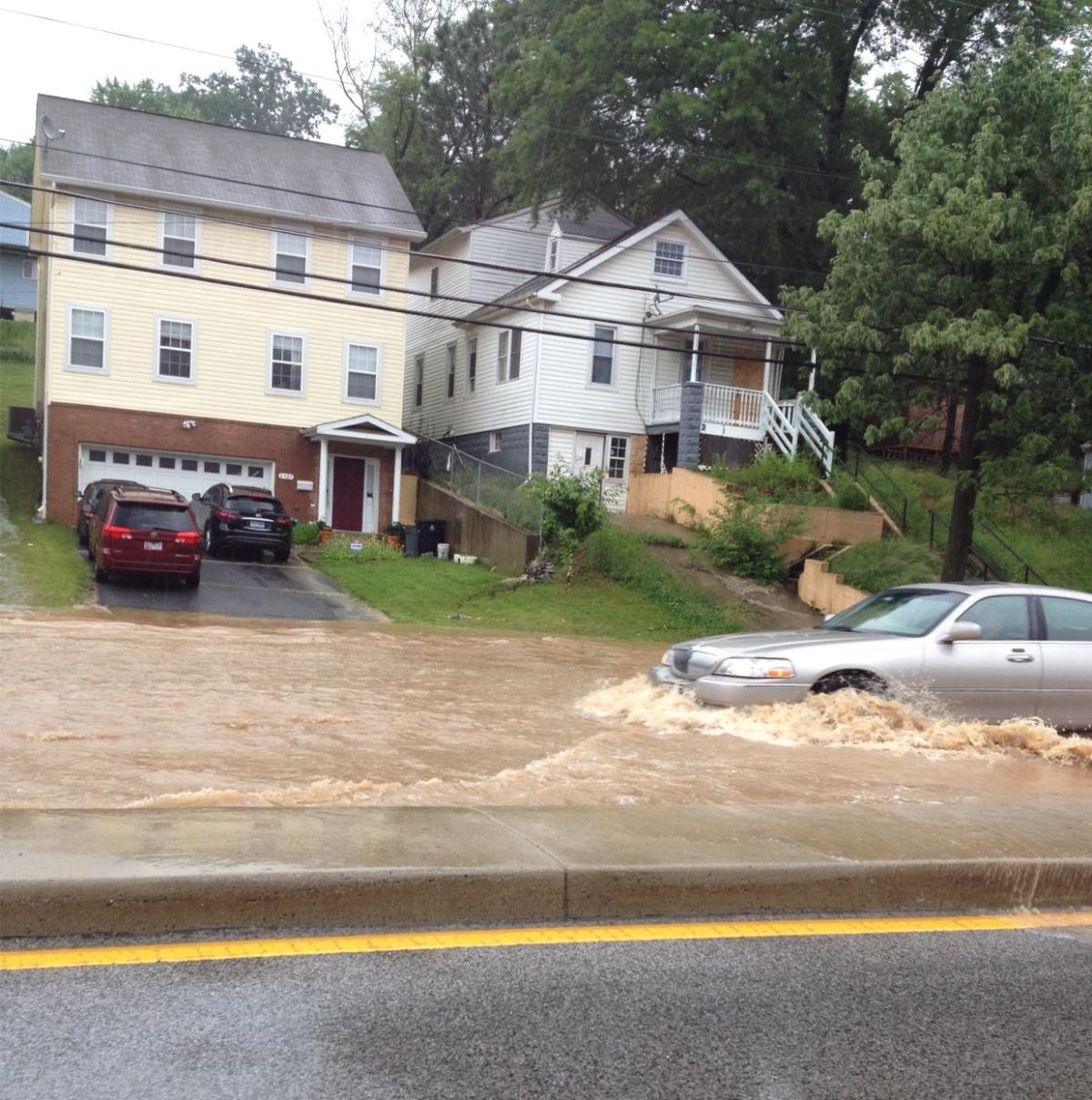
Prince George’s County is home to 24 transit stops on Washington’s Metro and 11 of the 21 stops on the state’s light-rail Purple Line, slated to open in 2027. Five of those stops are on or near UMD’s campus. Nearly a third of all of these stops are on or near floodplains, creating obstacles for development and increasing flooding risks to residents and businesses, particularly amid more frequent and powerful weather events.
Many of these flood-prone communities are also low- and moderate-income, said EFC Director Jennifer Cotting. Yet even with smart transit-oriented development, residents and small businesses face yet another challenge: potentially being priced out of their communities.
“These problems are often not talked about together but are intrinsically linked,” she said. “And while flooding is agnostic as to who is occupying the space, historically it has impacted the communities that could most benefit from the types of development happening around transit.”
The two-year project will capitalize on longstanding work by both EFC and NCSG within Prince George’s. For over 20 years, NCSG has informed practice and policy on land use, community and economic development and transportation through initiatives like the Purple Line Corridor Coalition and the Small Business Anti-Displacement Network. Considered one of the region’s most impactful partners in resource protection and restoration, the EFC was a major partner in developing Prince George’s County’s Climate Action Plan and is now supporting implementation.
Working closely with community-based organizations, nonprofits and government partners, researchers will conduct analyses of flood and other risks to housing and businesses within a mile of the 35 existing or coming transit stops across the county. They will also leverage geographical data and NCSG’s existing research on affordable housing opportunities and trends to understand challenges and opportunities facing transit development.
The research findings will inform tools and technical assistance to help communities become more environmentally and economically resilient, as well as advocate for equitable development policies. Through programs like EFC’s Sustainable Maryland, the project will also help communities identify and pursue grants to support their resilience priorities.
“Transit allows us to create opportunities in disinvested communities for green spaces, green infrastructure, remediation—things they would otherwise not see if the transit investment wasn’t happening,” said NCSG Director Kathryn Howell. “This gives us an opportunity to create good quality housing in neighborhoods where people are already losing their housing because of poor conditions, but it will require a lot of intentionality to avoid displacing existing residents.”