
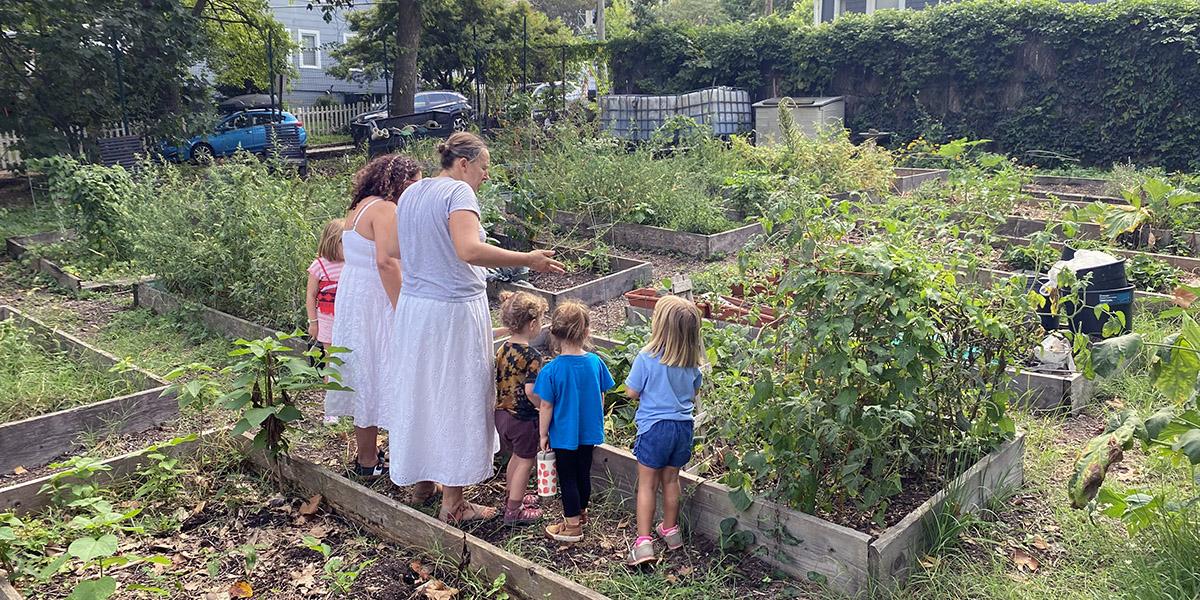
Tucked away on a quiet residential street, Mount Rainier’s community garden beckons like a botanical buffet. Hardworking honeybees and monarch butterflies tend to plots of eggplant and tomatoes, steering clear of the preschoolers clutching fresh-picked green beans in their pudgy fists.
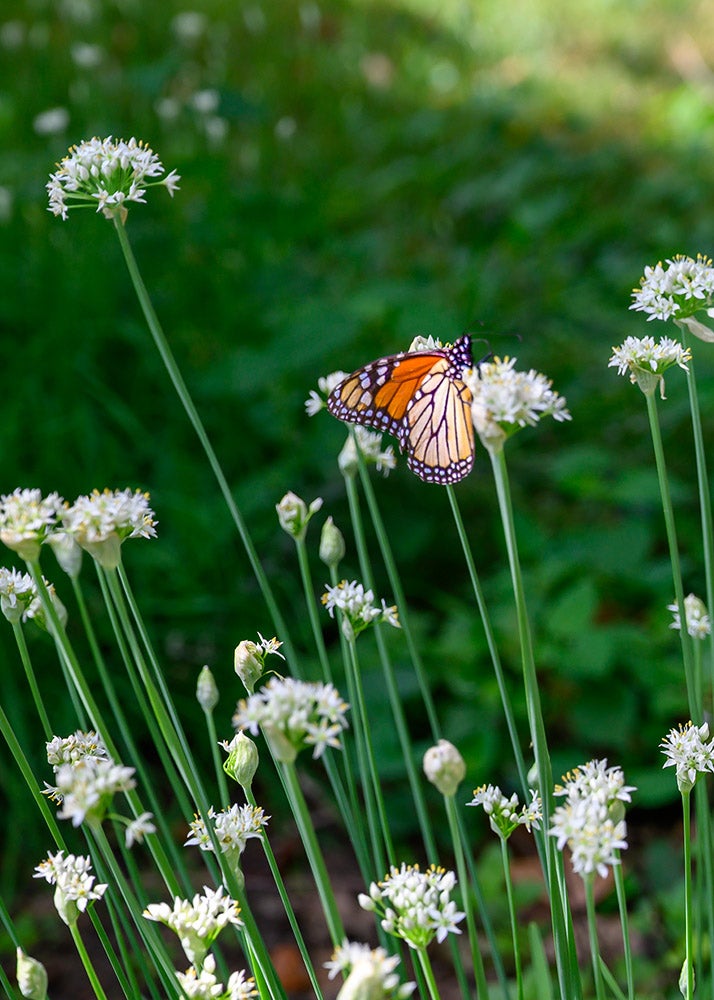
The garden (which was formerly a vacant lot) has been a boon to residents living in the cluster of apartments a block away, where growing opportunities are limited to balcony pots. But for 10 years, there was a caveat: With no water source on site, gardeners had to lug water from home. That changed this fall, when a University of Maryland program helped the city 5 miles to the south secure funding for a permanent water line, to the delight of city officials, resident gardeners and their thirsty flora.
“Because of our longstanding work with Sustainable Maryland,” said Councilmember Valerie Woodall, “we were able craft a narrative and leverage our initial funding to then say, help us take the next step.”
It’s one of thousands of small “greening” actions that communities across the state have accomplished over the past 15 years in partnership with Sustainable Maryland (SM), a program run by UMD’s Environmental Finance Center that offers free assistance pathways to grant funding, expertise, training and a network of green-minded peer communities. With the addition of Delmar and Glenarden this month, the program now boasts 101 participating municipalities in its ranks — over 60% of those in the state, including 100% in Prince George’s County.
SM communities have blanketed landfills with solar panels, employed hungry goats to eradicate invasive species, launched residential composting programs and outfitted their police squads with electric vehicles. In nearby Riverdale Park, the program helped the town’s green team instigate “migration-friendly” streetlights, build rain gardens, install public art and work with town officials to establish food security programs. The town’s latest project, in partnership with the nonprofit Casey Trees, transformed a vacant, overgrown lot into a park so inviting it would make Leslie Knope blush.
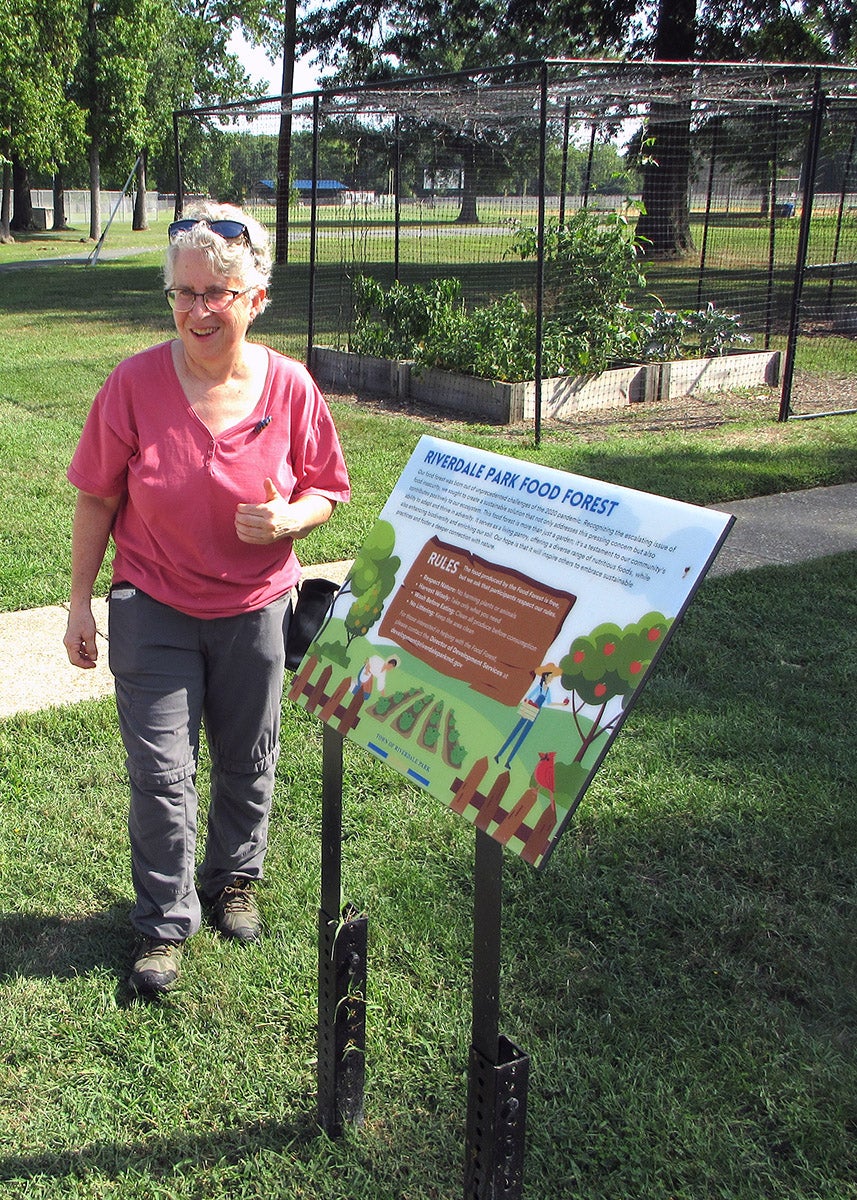
Lora Katz, who leads Riverdale Park’s green team, said the program’s support is critical for smaller municipalities stretched thin; Riverdale Park, with over 7,000 residents, has just 60 municipal staff, half of whom are police officers.
The SM program works with community Green Teams to identify local priorities but also demonstrates what’s possible, through SM community peer exchanges, like the Route 1 Corridor Green Team Summit, where jurisdictions shared practices for addressing stormwater and establishing pollinator gardens. If a town wants to create a composting program, stave off mosquitos or become bike friendly, SM can connect it to other communities that have succeeded.
“The towns that join our program often have the mindset of, ‘Oh, what else can we do?” said Mike Hunninghake, the program’s director. “It’s a virtuous cycle.”
The Environmental Finance Center, the UMD-based National Center for Smart Growth and the Maryland Municipal League established Sustainable Maryland in 2011 to provide technical assistance to Maryland communities seeking to meet environmental, economic and social sustainability goals. Participating communities choose from a seemingly endless roster of actions — from establishing a farmer’s market to installing LED lighting in government buildings — to obtain certification, which must be renewed every three years.
The program, initially funded through foundation grants, now receives about $500,000 annually from the state to operate. As part of that funding, SM also administers over $100,000 each year to fund sustainability projects in participating communities, from bat boxes and bike racks to compost dropoffs and pollinator habitats.
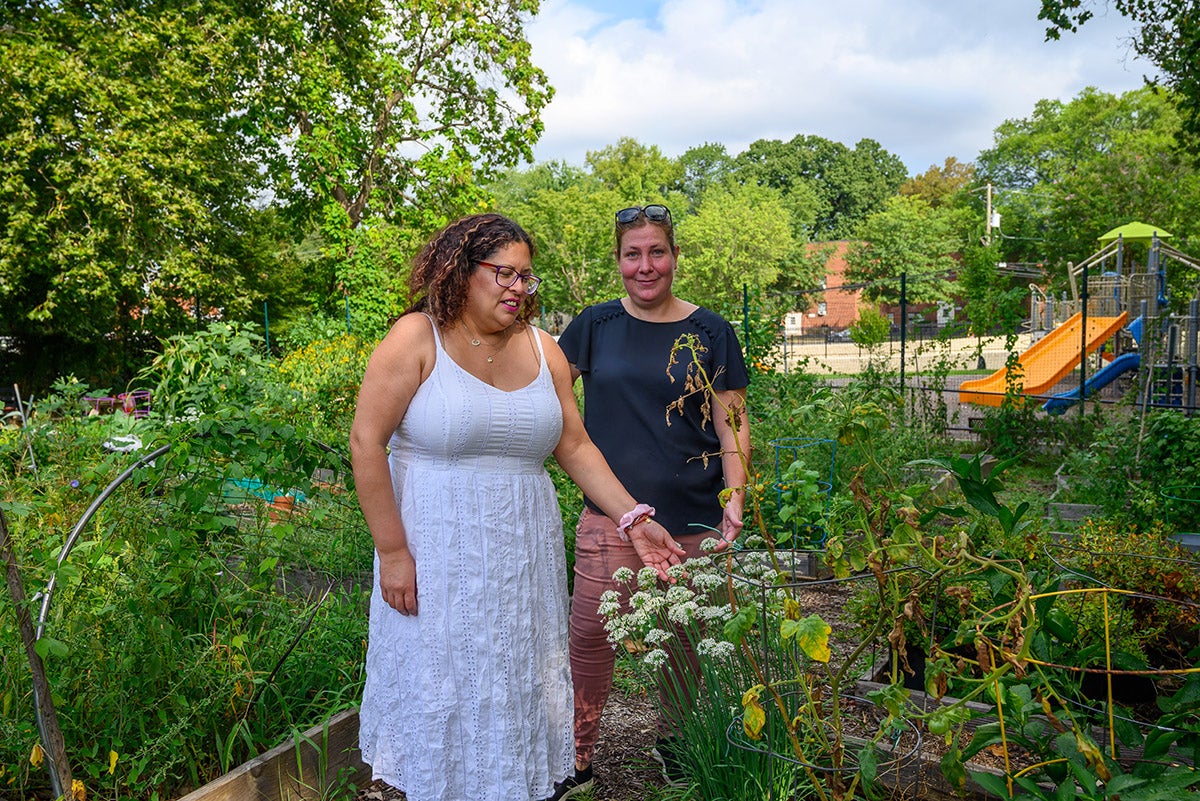
Hunninghake has run Sustainable Maryland with his colleague Brandy Espinola MPP/CONS ’15 for the past 13 years. While an avid bicyclist, he’s logged countless miles behind the wheel of his Hyundai, zigzagging across the state to supply support and inspiration to green teams and municipal staff. He has a mental rolodex of projects and people; walking between the plots in Mount Rainier’s community garden, he beams when talking about the city’s food forest just two blocks north, and how Woodall is one of many former green team volunteers across Maryland who went on to serve as an elected official.
“Sustainable Maryland is a connector,” said Katz. “There’s a momentum that they have built with communities, and definitely in Riverdale Park, that’s created a critical mass. And I don’t think we could have done it on our own in the same amount of time. It would have been much more gradual.”
Seeing the benefits add up, said Woodall, emboldens municipalities to go bigger. After attending a SM leadership training on clean energy projects, the program team connected Chestertown in Kent County with the Maryland Clean Energy Center, which helped them secure $7.7 million in financing for a solar project that will serve both the municipality and its residents The town expects to save $400,000 annually, and eventually even produce revenue; community solar participants are projected to save 10-20% on their annual electric bills.
Certified since 2012, Mount Rainier built on its work with Sustainable Maryland to earn a $9.7 million grant from the U.S. Department of Transportation to launch a Safe Streets for All initiative, which will ensure walkability to the city’s schools; 20% of the funding has already gone to build and repair sidewalks, high-visibility crosswalks and speed humps.
“Our longstanding work with Sustainable Maryland helped us demonstrate that we know how to manage projects and can handle big money, responsibly,” said Mount Rainier Mayor Celina Benitez. “All of these projects add up, and it has had a huge trickle-down effect for our city, not just in the quality of life for our residents, but in the opportunities we’re now able to pursue.”
Coaxing communities to “drink the [program] Kool-Aid” often comes down to showing them what’s possible, said Hunninghake; for some, the idea of getting solar panels on municipal buildings or starting a stormwater management program feels insurmountable. It’s one of the reasons the program shares community certification reports on its website — to demonstrate to other towns and cities that it’s easy being green.
“It's getting people exposed to something new and getting them to understand that they too can do this in their communities… and that's a huge part of what we do,” he said.