When a procession of red ants made a run at the communion chalice during a balmy Sunday morning mass, Reverend Lauren Bloom knew she had a problem.
The outdoor amphitheatre at St. Luke’s Episcopal Church in Eastport, Md.—a cherished spot for community festivals, support groups, and outdoor worship—had always been harmonious with its natural backdrop, a peaceful pocket on the church property frequented by animals and insects. But time, the elements (and in this case, the ants) were threatening that divine coexistence.
A desire for solutions—and the memory of a former parishioner—guided Bloom to the University of Maryland’s Architecture Program. Four months later, students in Associate Clinical Professor Michael Ezban’s Design in Practice course delivered a portfolio of ideas that could resurrect the beloved amphitheater while staying true to the parish’s environmental mission.
“This project was about ensuring that this special space continues to serve as an anchor for the community and to commune with its natural environment,” said Ezban. “We were thrilled that Pastor Bloom entrusted us to develop some design ideas that can guide its future.”
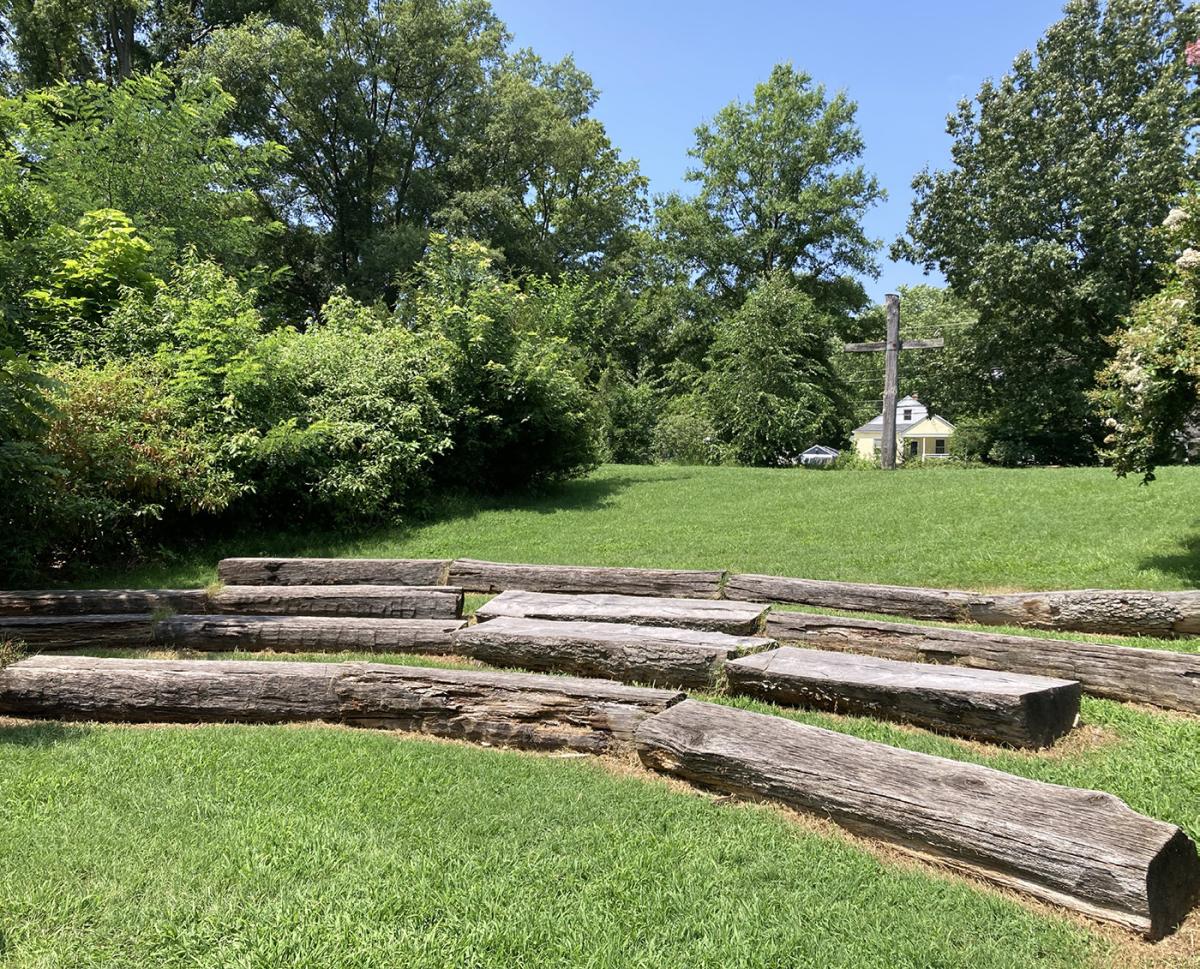
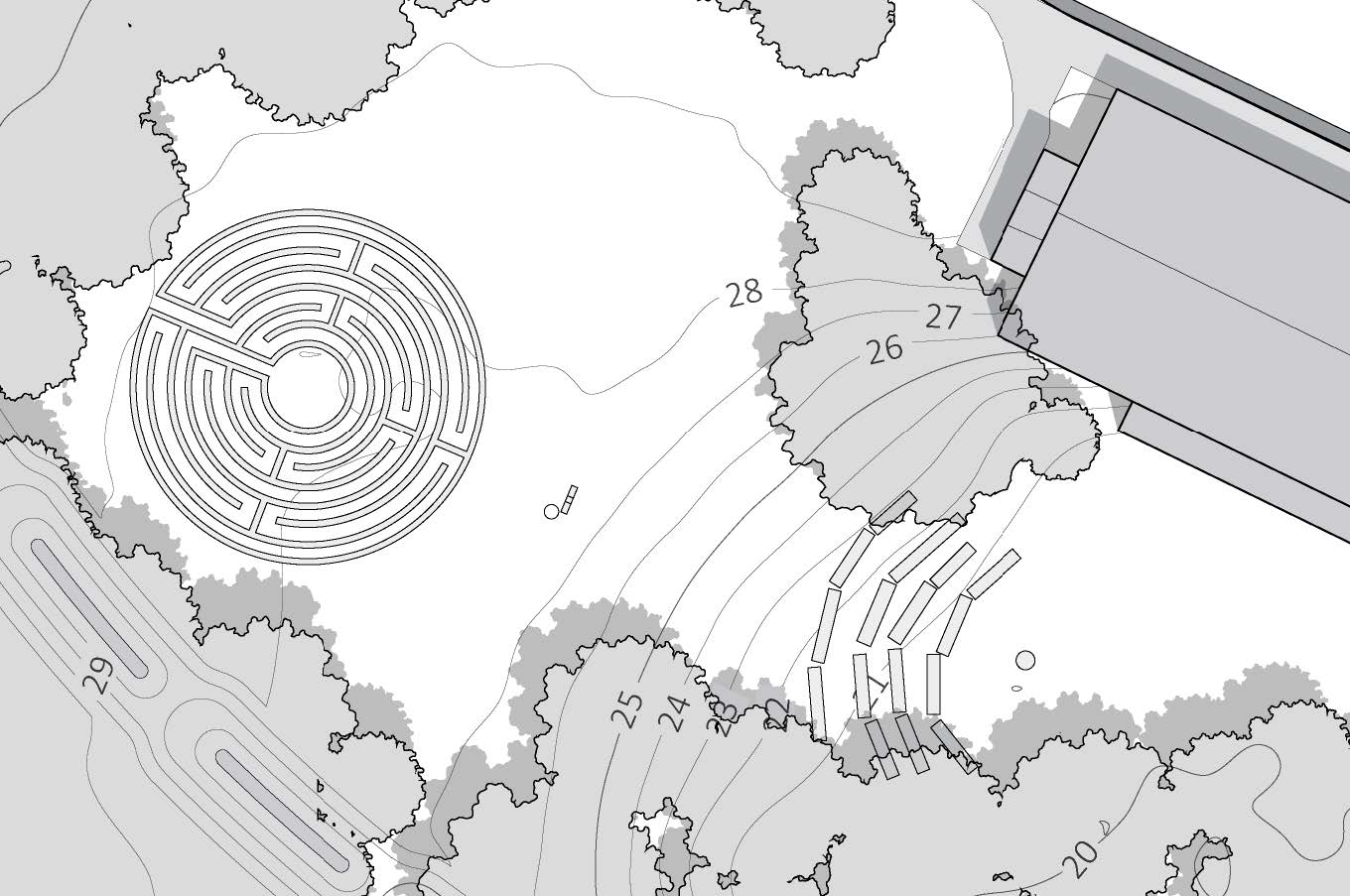 The decade-old amphitheater was the byproduct of a stormwater reclamation project on the four-acre property, affectionately known by the community as the “Reclamation of Nature,” that is designed to filter rainwater from a 26-acre drainage area before it enters the Chesapeake Bay.Trees cut down for the project were hewn into long benches and placed in a semi-circle along the sloped property. A large piece of trunk, fit for a sermon on the mount, serves as an altar.
While a cherished space that has served the community well, it's not without its problems: the wood “pews” that were left untreated to ensure no contaminants entered the watershed are now rotting and unstable, and the eight-foot gradient is difficult for parishioners with mobility issues. The amphitheater can seat 100, but only if congregants are elbow-to-elbow with children on laps. Its lack of shade makes year-round worship more difficult as the climate warms.
Pastor Bloom turned to Maryland because of David Fogle, a longstanding parishioner until his death in 2023 and founder of the University’s Historic Preservation Program.
“One of my goals as pastor is to turn over the keys to St. Luke’s to my successor without the need to immediately raise a ton of money,” she said. “And as I thought more about this space, I thought it might be a good teaching project… and I thought of David.”
The project criteria—to create an accessible, easy-to-maintain and flexible space that’s environmentally sound, can accommodate multiple ages and abilities, and fits within the parish’s modest budget—required a “Hail Mary” design solution that would have been challenging for graduate-level architecture students. Ezban’s class, which satisfies a general education requirement for undergraduates, pulled students from all over campus, from bioengineering to communications; 75% of the class were from majors other than architecture. But the small scale of the project provided fertile ground for the students to connect new concepts in design with the human experience in a meaningful way.
“Designing amphitheaters allowed us to spend a semester thinking about sitting in the public realm,” said Ezban. “We were tackling these philosophical questions about sitting as both individual and collective public experiences, but we also got into specifics about ergonomics, materiality, and accessibility that could elevate something as simple as taking a seat into a transformative and inclusive act.”
Over the course of the semester, Ezban took students on a deep-dive into precedent amphitheater projects by landscape architects and discussed the components critical to a project's success, from site surface and materials to shading and seating arrangements. The class heard from Bloom about the space’s history and function, the environmentally-minded mission of the parish and the surrounding communities drawn to the property year-round. Much of the semester was dedicated to the design itself; students drew and sketched by hand, but they also leveraged LookX, a generative AI browser-based platform, to rapidly iterate visualizations and test design ideas.
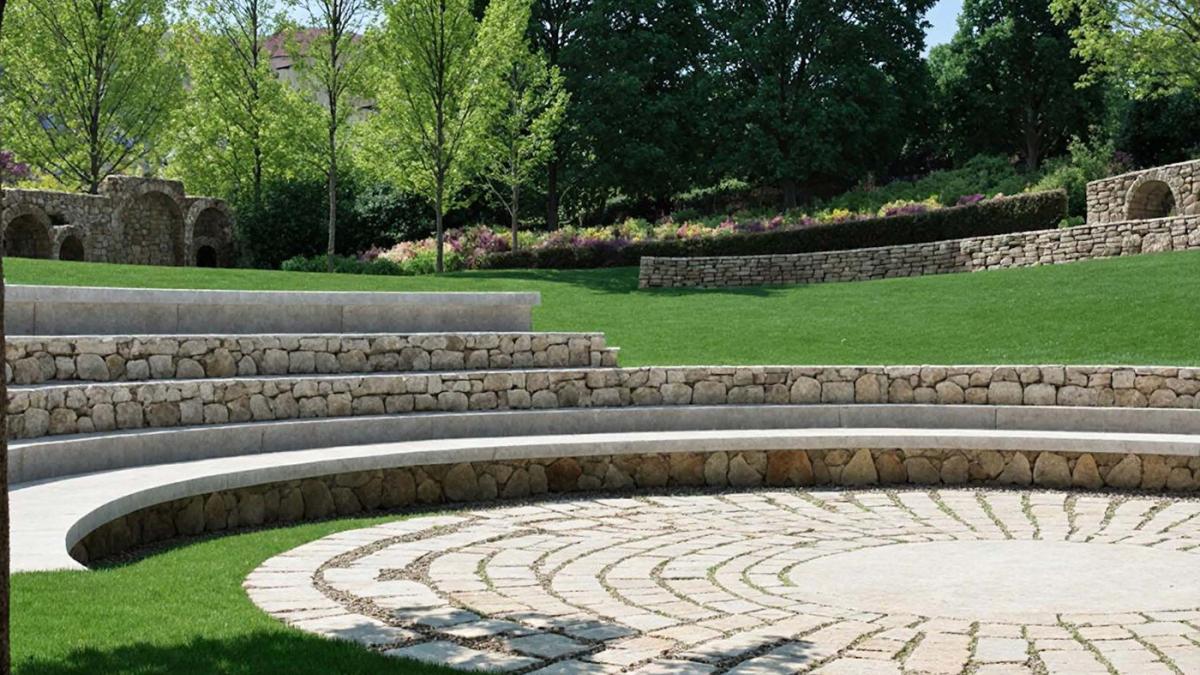
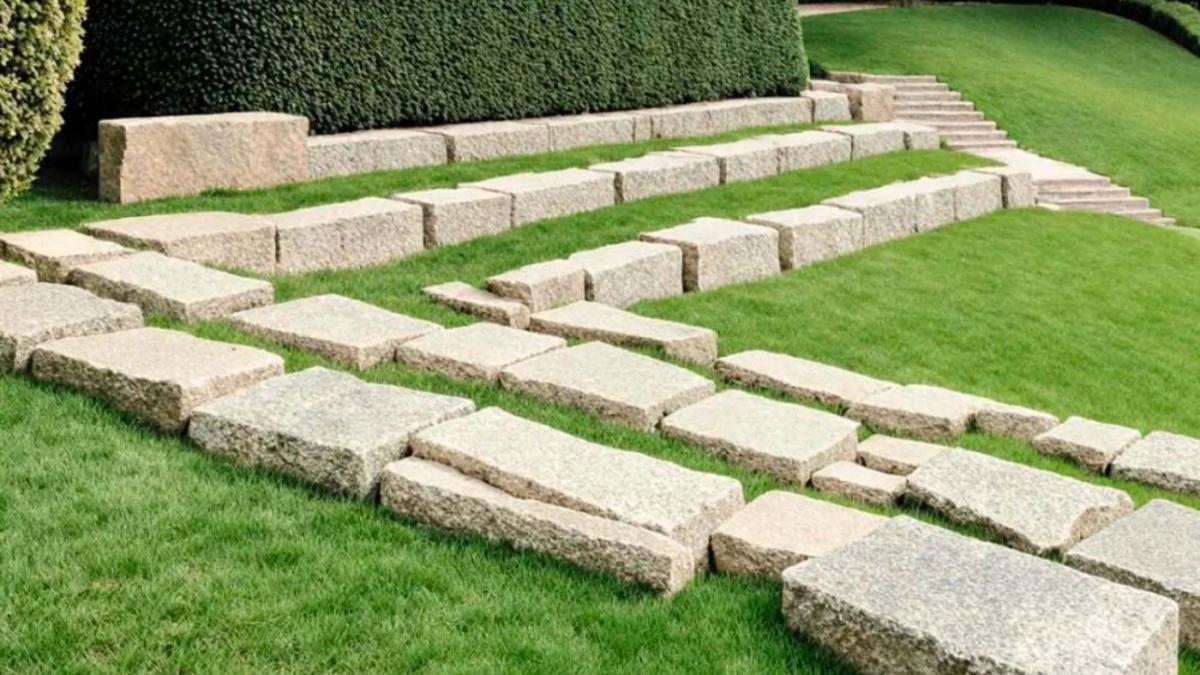
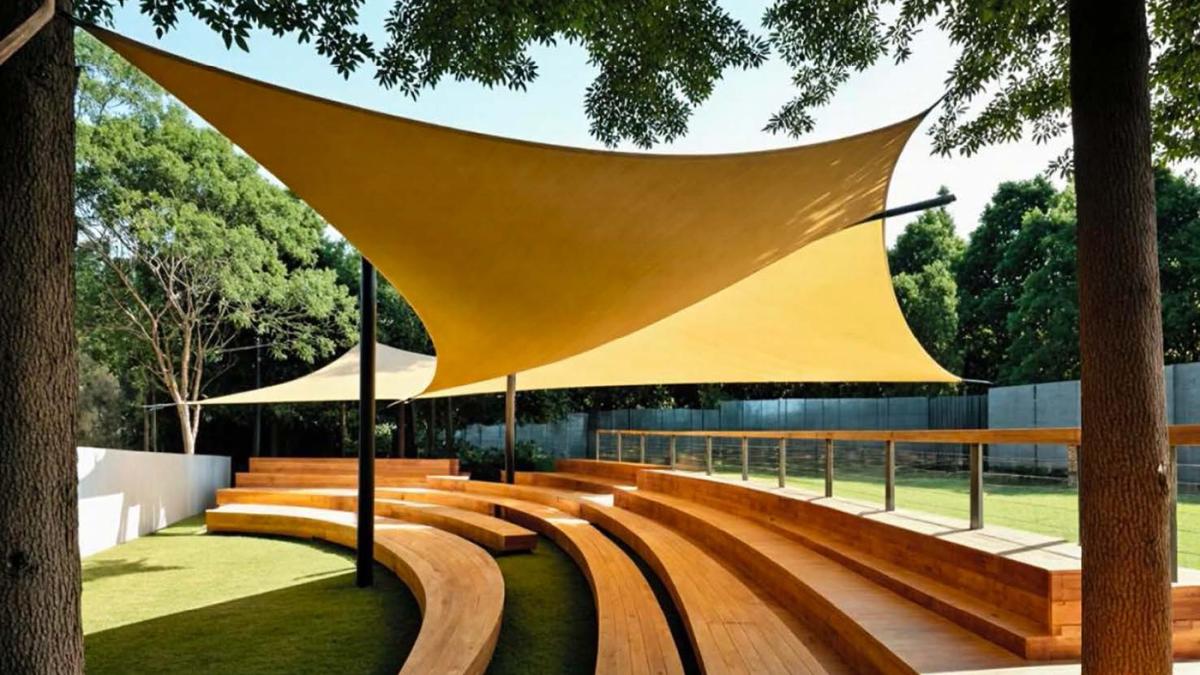
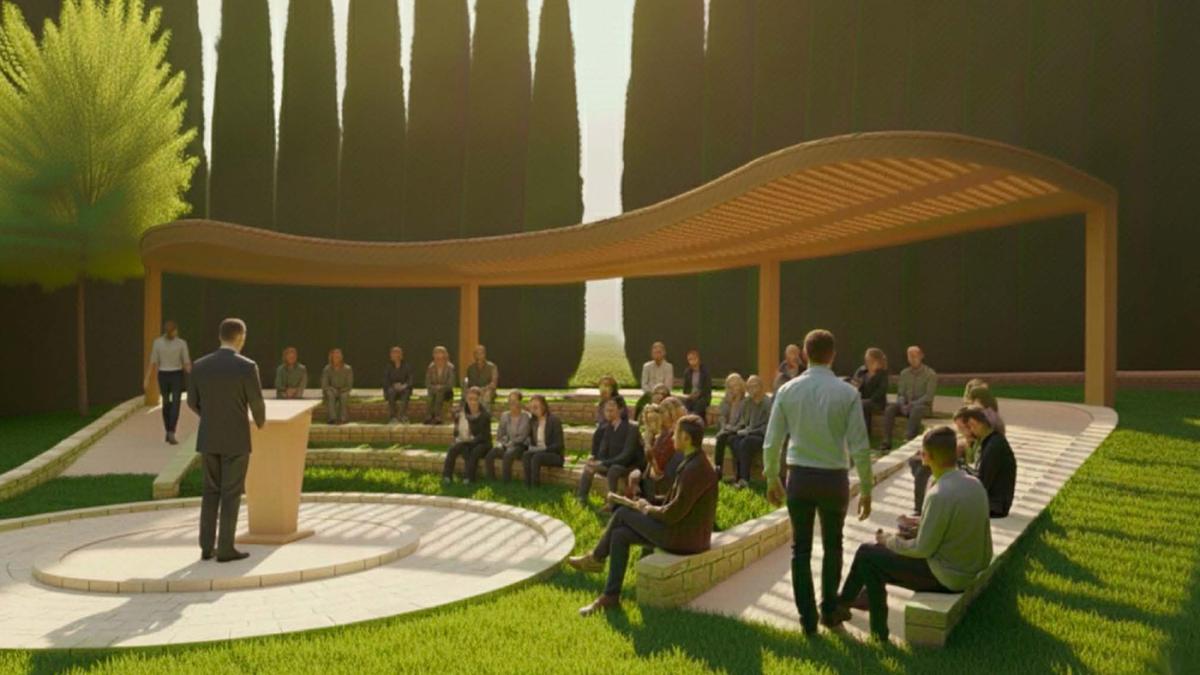
The concepts, which were presented last week to Pastor Bloom and members of the church leadership, ranged from sustainably sourced wood pergolas over elegant concrete seating to canvas sails that protect from the sun and gently sloped paths for parishioners with mobility issues.
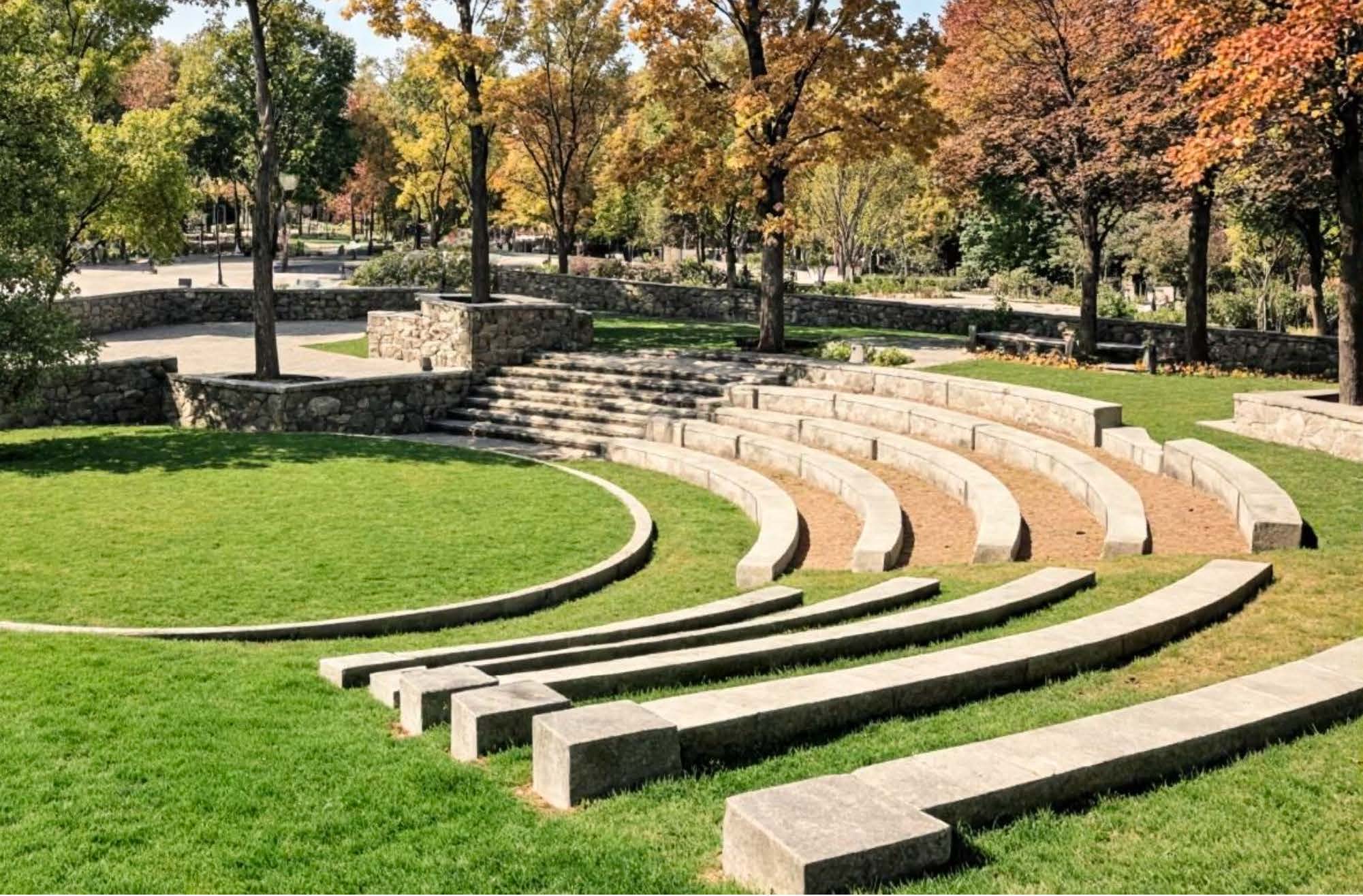
Animal Sciences freshman Frederick Montalto combined inspiration from precedents with feedback from Pastor Bloom to develop a circular concept of stone seating with an unobstructed central presence for performances, worship and other church activities. While he admits he signed up for the class expecting to learn about big cities and famous architecture, the small-scale project opened his eyes to the importance and impact of design in everyday life.
“I look at everything differently after taking this class,” he said. “It’s given me a whole perspective that I think I’ll take everywhere I go.”
A booklet with a series of precedent projects, material samples and availability, and a curated offering of student designs will be provided to St. Luke’s leadership and congregation to cultivate conversations about the space’s future.
“It was a blessing to be able to collaborate with Michael and his students,” said Pastor Bloom. “Their designs were thoughtful, creative and beautifully rendered. We’re very excited to bring them to the congregation.”