Abby Chi’s grandfather is such a fixture at his community pool that many of the children taking swim lessons alongside his daily laps know him by name: Mister Hi. But Mister Hi isn’t his actual name.
“It’s because he always waves hi,” laughs Chi, who used the anecdote, and her tight-knit relationship with her two sets of grandparents, as inspiration for her thesis: An adaptive reuse project that’s one part wellness facility for seniors, one part daycare, creating intergenerational opportunities for connection, teaching and learning, and friendship.
Through her relationship with her grandparents, Chi has seen how the built environment often works against the elderly in unintentional ways, creating barriers that can lead to isolation and exclusion.
“They would mention things like ‘when you’re old, you are going to lose purpose.’ It kept adding these layers to what could be a meaningful place for them,” she said. “So many areas are not meant for them, and it was something I wanted to do something about.”
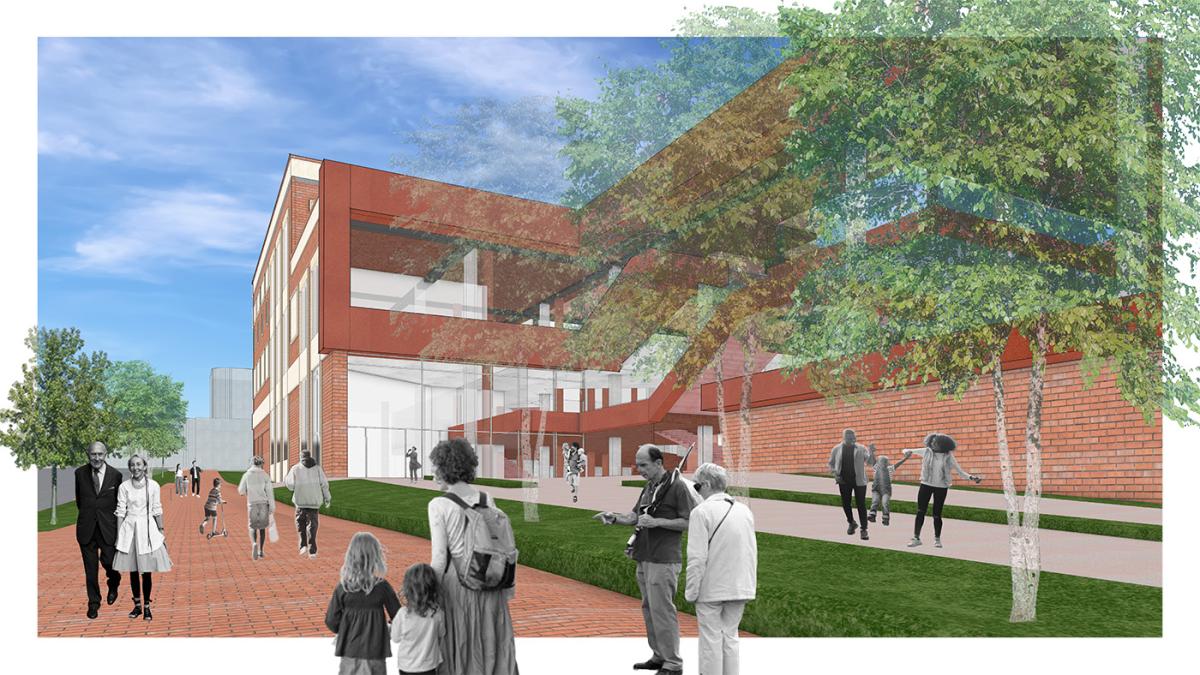
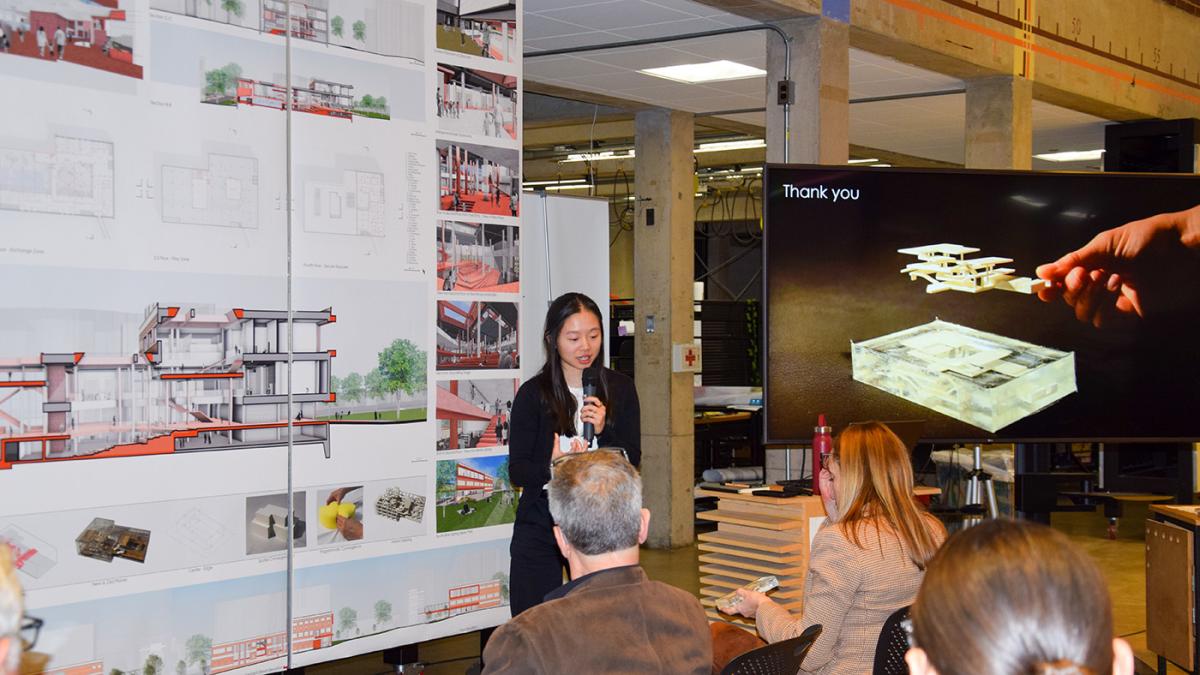
Chi’s design concept, which won the University of Maryland Architecture Program’s 2025 Thesis Prize, reimagines a vacant office building as a place where the very young and their older, wiser counterparts overlap throughout the day through circulation and programming. A light-filled interior plaza serves as the heart of the building for surrounding classrooms, activity spaces and an upper-level daycare, their glass walls offering clean lines of sight across the entire space.
While Chi relied somewhat on her experiences during her design process, she dove deep into the impacts of social spaces, health and wellness and intergenerational modality in human relationships, resilience and feelings of belonging. She studied pool typology, and how the use of water, air and light can create a generous environment for connection and social interaction. Her research shows in the spaces she created—from a gallery space and cafe on the main floor to flexible spaces for activities and resources. As her family’s local tech support person, the facility’s computer lab is a nod to her grandparents.
“It was something that was an obvious passion for me,” she said. “But the finished project is a culmination of all the research and tools I learned at UMD.”
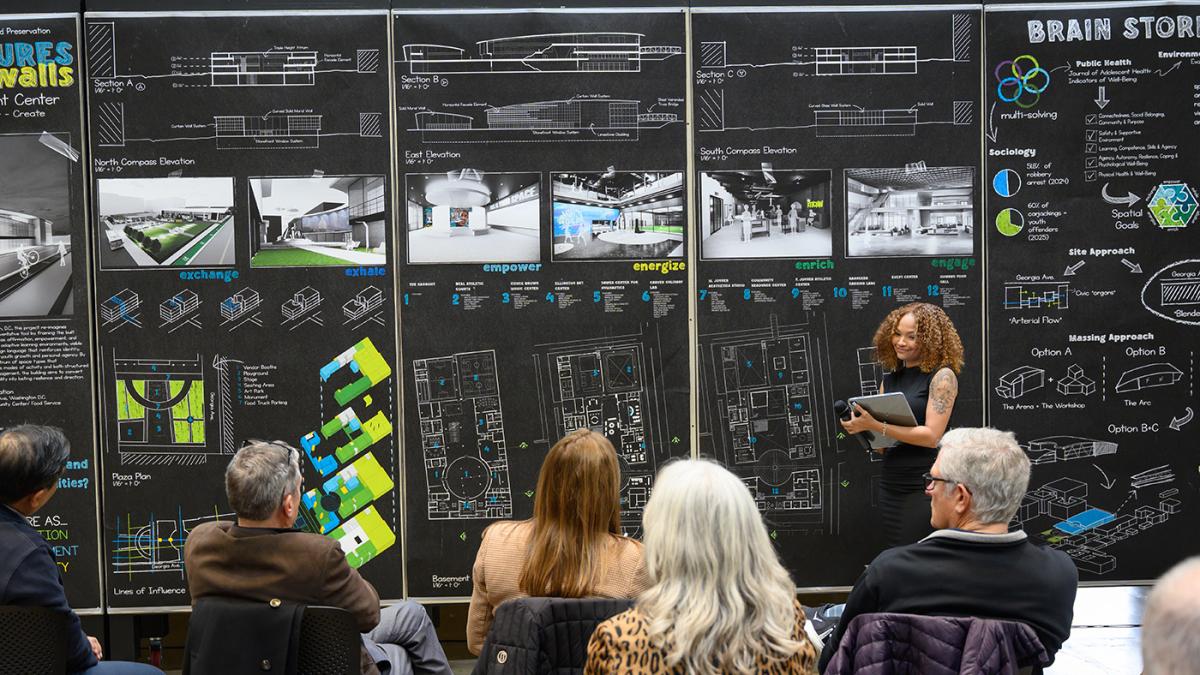
It’s not ironic that Lauryn Hall’s passion for design—and culminating master’s thesis project—originated in an experience she had more than a decade ago at Howard University Middle School, during an after-school program that introduced her to architecture. A brief career as a middle school teacher gave her new insight into the importance of that experience, one that eluded so many of her students: a “third place” to go, between when school lets out and evening activities at home, where students can channel their energy into something meaningful.
“It was really a full circle moment,” she said. “I had so many students who were so bright, but their energy was being put into the wrong place.”
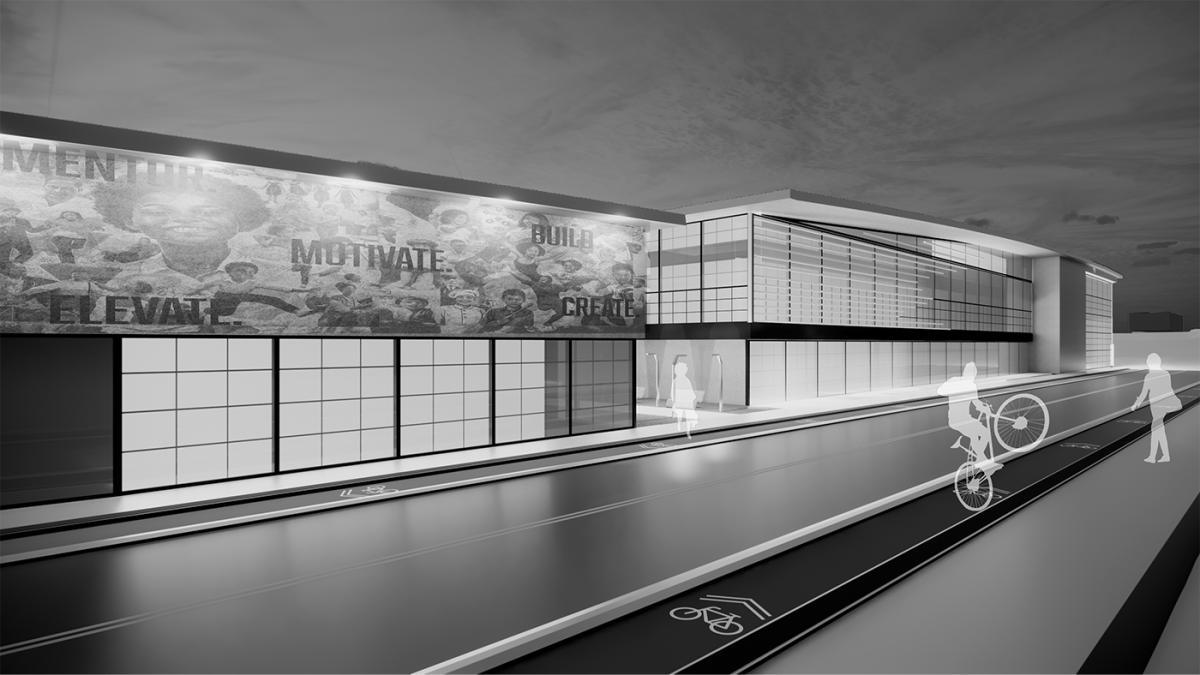
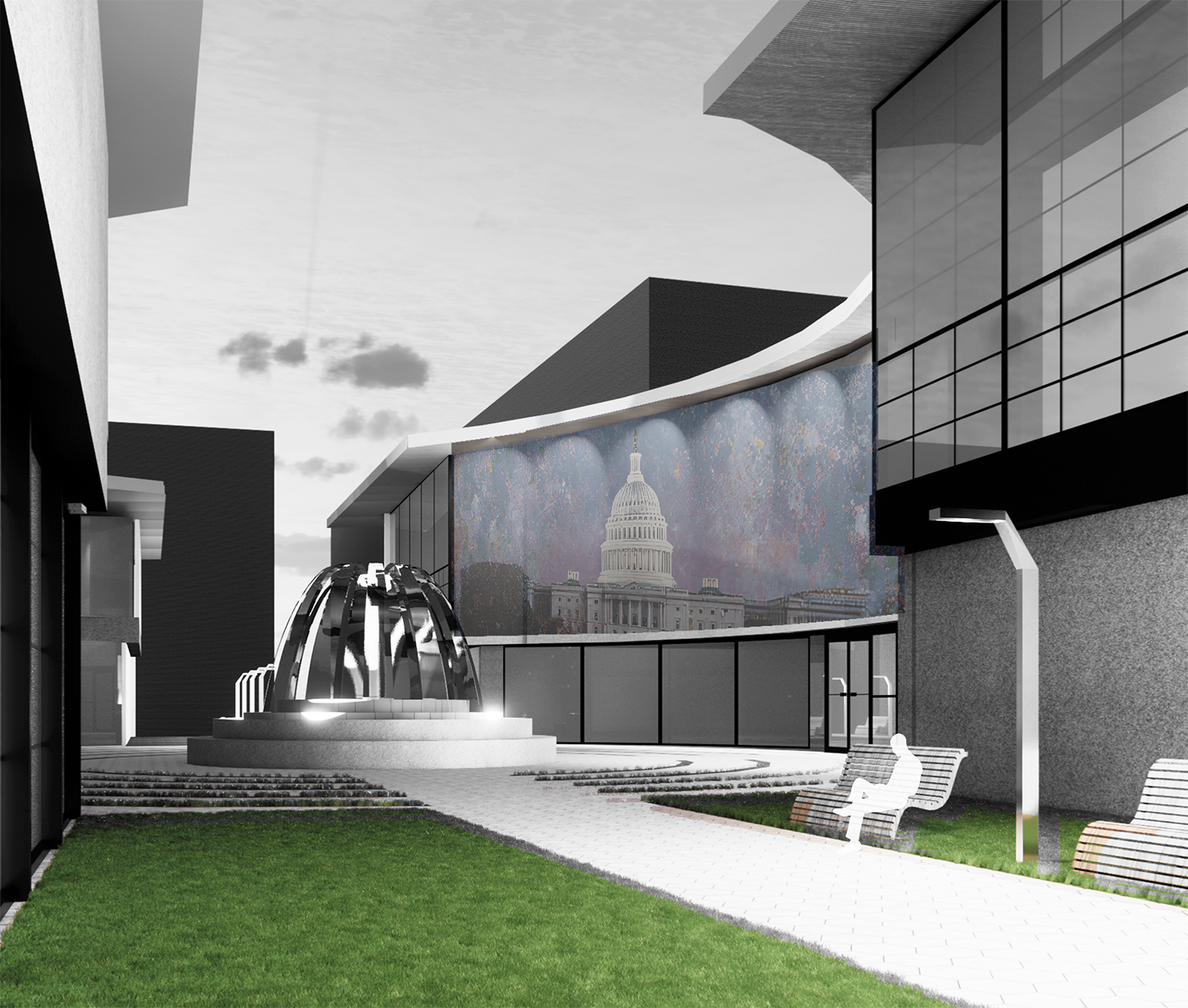
Her design scheme for an after-school enrichment center in the Shaw neighborhood of Washington, D.C., which took the 2025 Director’s Prize, fills a critical “missing middle” for middle and high school students in a way that stokes identity, confidence and well-being. Her concept includes ample spaces for students to explore new things, exercise, connect, express themselves and recharge. Beyond the traditional basketball courts and game rooms, an aesthetic studio for hair and nails, artists’ labs, and a teaching kitchen cultivate new passions, while quiet pods offer spaces to reset.
Hall engaged 20 middle school students in a two-day design workshop to guide her design, and incorporated several of their ideas in the finished project, including the central void in the massing that creates a beautiful light and airy space.
“It’s nice to see how an innocent drawing on graph paper with markers could turn into something special that ended up in my finished project,” she said.
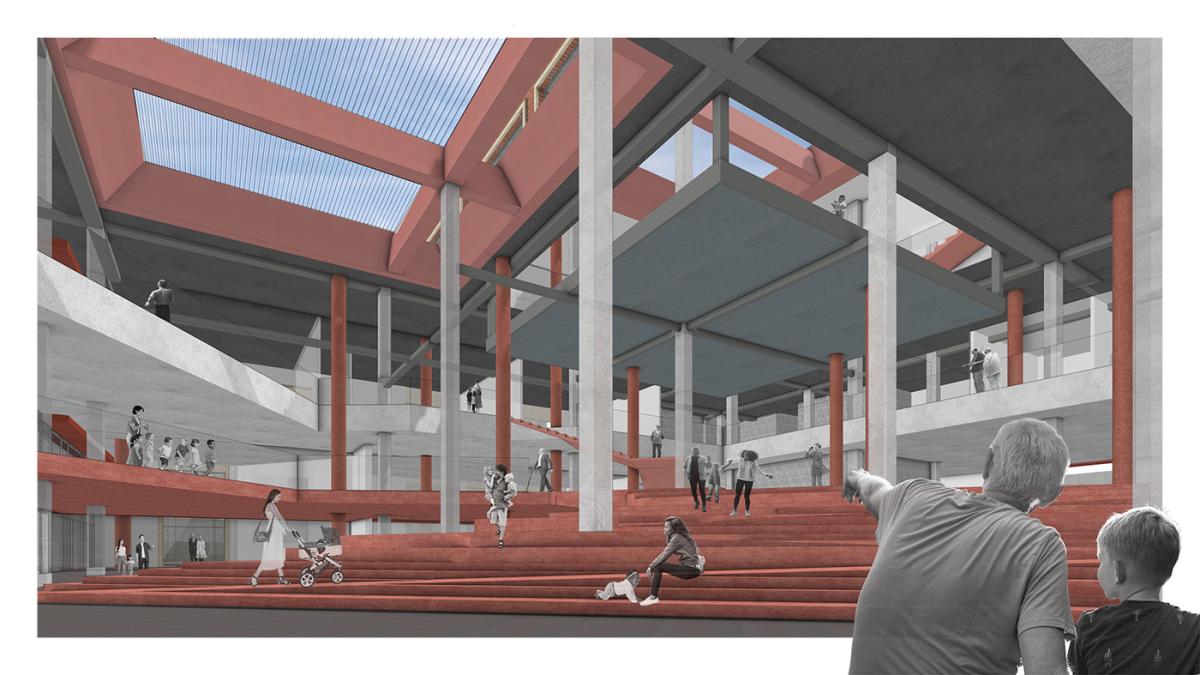
From Overlooked to Overlap: Designing for Intergenerational Connectedness through Adaptive Reuse